
tquark MenJiang integrates with HID Amico — 'face scanning' is just the first step in facial recognition access control!
Facebook
X
LinkedIn

tquark MenJiang integrates with HID Amico — 'face scanning' is just the first step in facial recognition access control!

If you follow the security, access control, or low-voltage systems industry, you're probably no stranger to'tquark MenJiang'. The MenJiang series' web-based management interface, eliminates the need to install client software on every computer. It's well suited for multi-site management, enabling direct centralized control and making both use and ongoing maintenance much simpler.

On the HID access control hardware side, MenJiang already integrates with several HID Global Access Controllers. This time, HID has launched a new generation of Amico facial recognition device, and MenJiang has completed integration with it as well.

HID Amico isn't just a facial recognition device that lets you pass through with a face scan — it also supports different facial verification modes.Businesses can configure verification methods according to the security requirements of different areas, allowing quick pass-through at general entrances, while data centers, R&D centers, core process areas, vaults, or other high-security zones can combine card, mobile credential, or PIN verification — letting a single access control system address the security needs of different areas.

So what facial recognition methods does Amico actually offer?

1. Face Scan Only — 1:N Facial Recognition
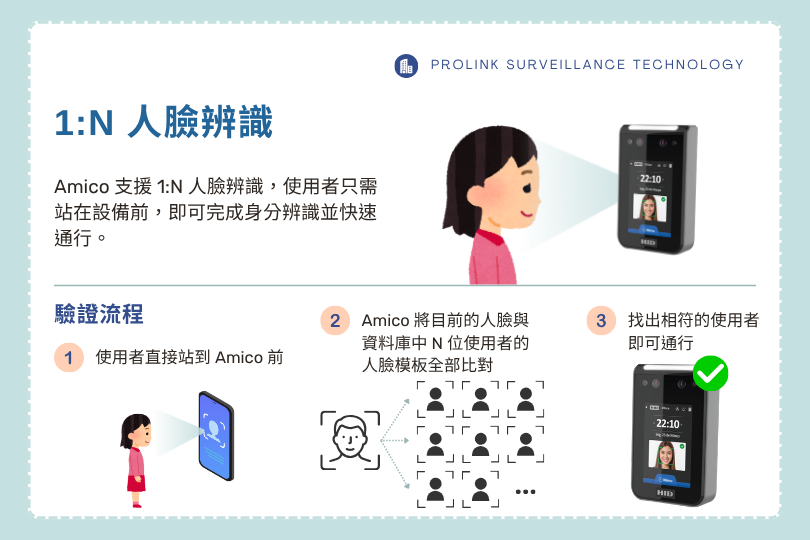
Amico supports 1:N facial recognition. Once a user is registered, simply standing in front of the device completes identity verification for quick pass-through.

The system captures the user's facial image and, without knowing who you are in advance, compares it againstthe facial templates of N users stored in the database, to find a matching user. Once identity is confirmed, the door unlocks. The biggest advantage of this method isthat it's convenient and fast, making it ideal for the main entrances of small and medium businesses, building lobbies, Speed Gates, and similar settings.

2. Confirm Identity First — 1:1 Facial Recognition

1:1 facial recognition first confirms the user's identity, then compares it against that specific user's facial template — making it suitable for high-security applications. Depending on where the facial template is stored, it can be divided into two approaches:

▌ Two-Factor Authentication (2FA) — Access Credential + Facial Recognition
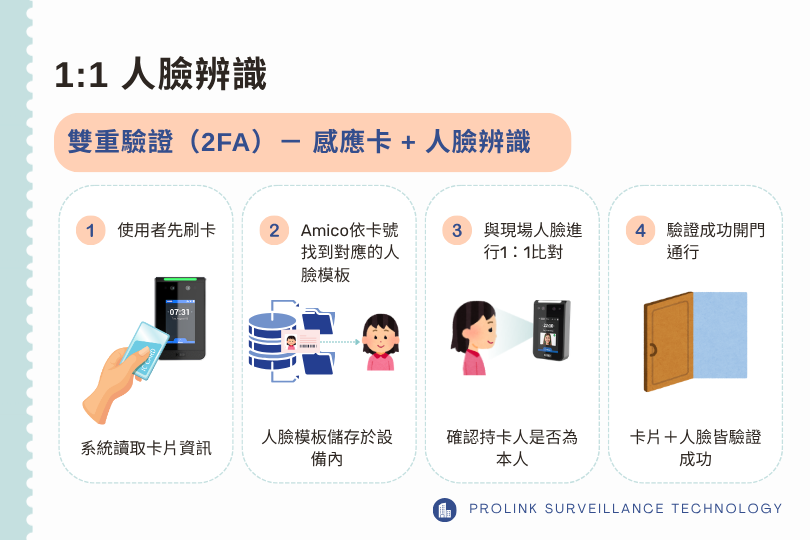
The user first taps their card. Amico uses the card number to locate the corresponding facial template on the device, then performs a 1:1 comparison with the face in front of it. Once identity is confirmed, access is granted.

It's similar to automated passport control at an airport — the traveler first scans their passport, the system retrieves their identity information, and then compares it with their face in person before allowing them through.

▌Template on Card (ToC) — Carry Your Facial Template With You
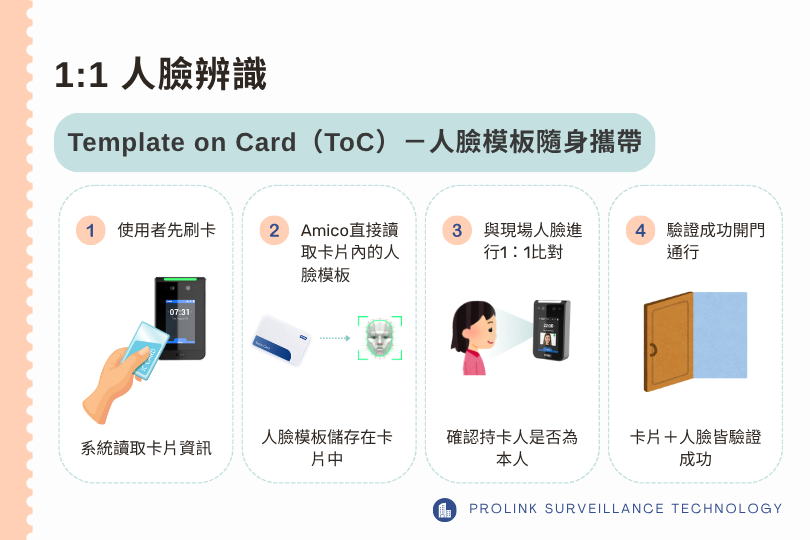
ToC also involves tapping a card first, followed by 1:1 facial comparison. The difference is that the facial template isn't stored on the device, but insteadstored on the card. After Amico reads the facial template from the card, it compares it directly with the face in front of it.

It's just like an e-passport — the facial template is stored on the passport's chip, and verification reads the data directly from the chip to compare with the person, without needing to query a device database.

The facial template is carried by the user, so it doesn't need to be stored centrally on the device, reducing the risks of centralized storage.

HID's Layered Access Control Architecture: Even If the Front-End Is Breached, the Door Can't Be Opened Directly
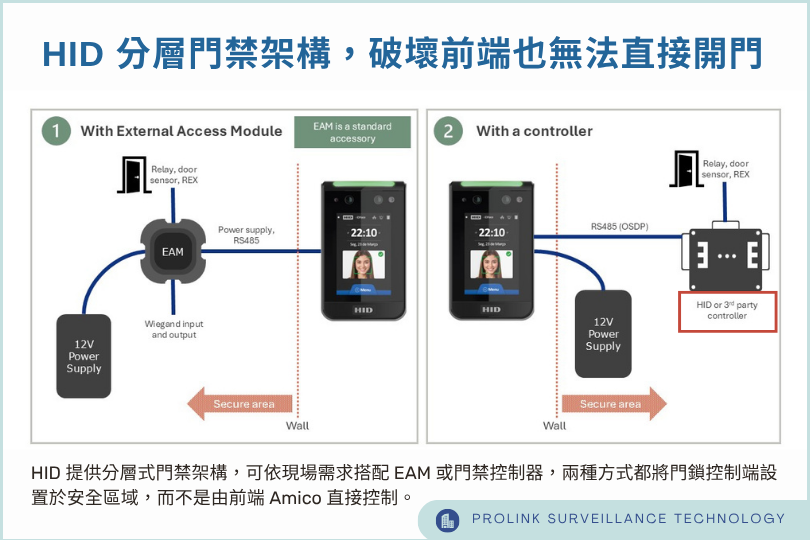
Some facial recognition access control systems have the front-end device directly control the electric lock — if the device is damaged or its wiring is tampered with, the door could be left wide open.

HID's approach separates identity verification from door control. Amico handles identity verification, while the actual door control is handled by the EAM or Access Controller inside the secure area. Even if the front-end Amico is compromised, it cannot directly control the lock to open the door.

Facial Recognition in the AI Era: Do We Still Need to Confirm Whether There's a 'Real Person' in Front of the Camera?
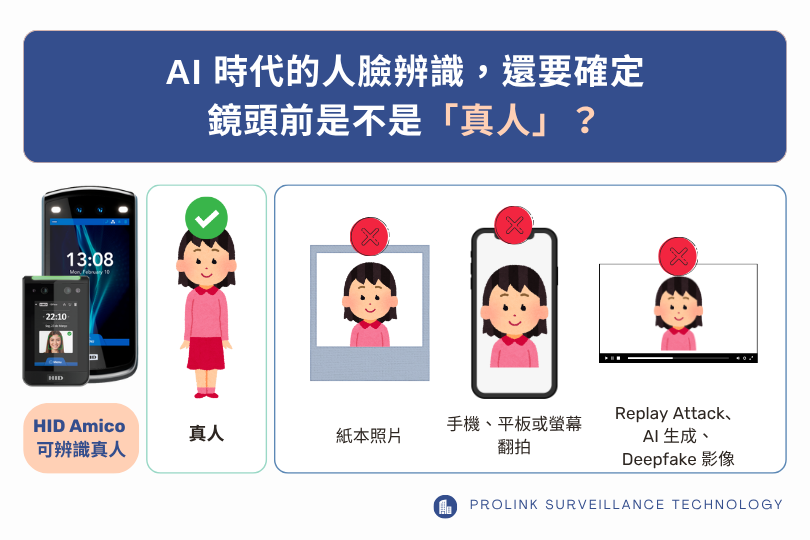
These days, it's becoming increasingly easy to use AI to generate fake face photos or Deepfake videos. Facial recognition in access control needs to do more than identify who someone is — it also needs to determine whether there's a live, real person in front of the camera. Without this step, a photo, video, or AI-generated image could actually get through!

Amico is powered by the Paravision facial recognition algorithm and supports PAD (Presentation Attack Detection) liveness detection, identifying common spoofing methods such as photos and screen replays — stopping them right at the first line of access control.

HID's International Hardware, Paired with a More Familiar Local Management Approach
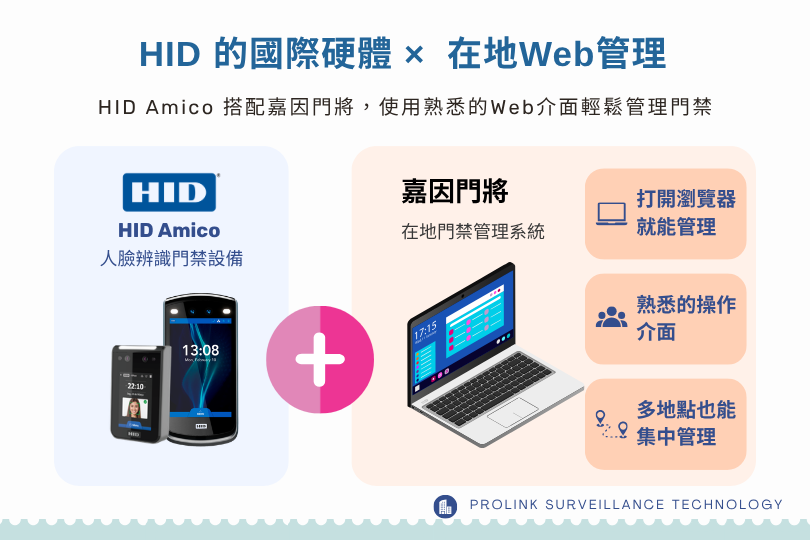
No matter how complete a foreign access control device's features are, on the management side — from the operating interface and permission settings to daily use — it still needs to match local users' habits, since access control is a system people interact with every day.

tquark MenJiang is an access control management system developed in Taiwan. With HID Amico integrated, it combines internationally branded hardware with the access control management approach that Taiwanese users are already familiar with.

Fill in a few simple details to receive personalized service!