
Keeping “zombie vapes” out of schools: AXIS technology detects invisible e-cigarette smoke!
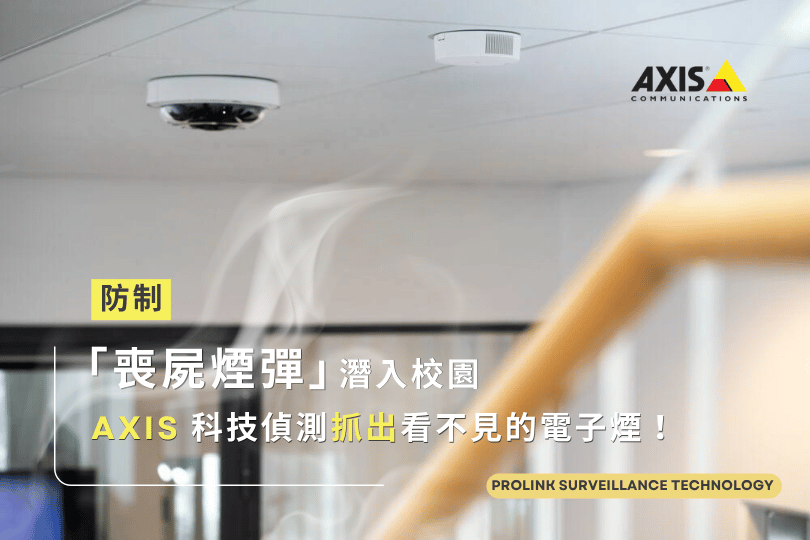
Back when school hallways were always buzzing with noise after class, teachers worried most about students skipping class, fighting, or sneaking off to smoke traditional cigarettes in the restroom. The smell was strong enough to notice from a distance, so anyone hiding in a restroom to smoke was quickly caught.
But today, you can't rely on the smell anymore.
"Zombie" vapes are quietly creeping into the unseen corners of campuses
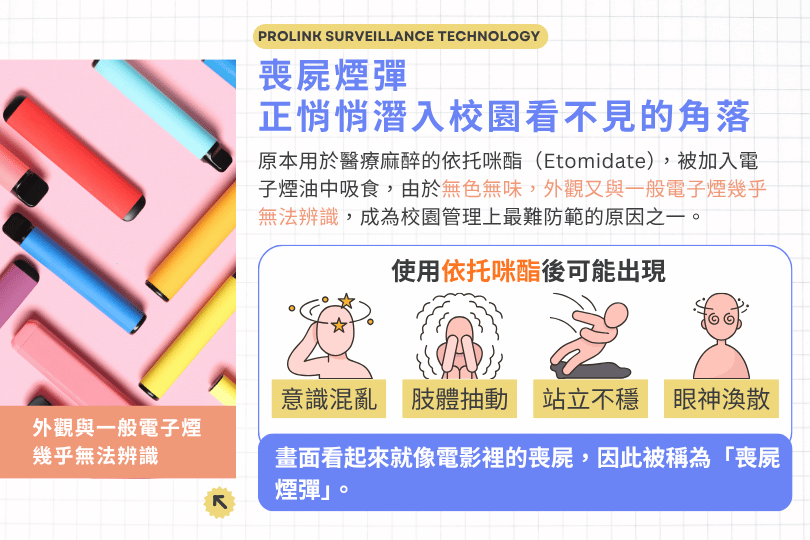
A topic drawing intense public attention recently —"zombie vapes", whose main ingredient,etomidate,is quietly making its way onto campuses disguised as e-cigarettes. Etomidate, originally used as a medical anesthetic, is being mixed into vape liquid by criminals. Because it's colorless and odorless and the vapes look almost identical to ordinary e-cigarettes, it has become one of the hardest drug threats for schools to detect and prevent. Etomidate is currently classified as a Schedule 2 controlled substance in Taiwan and is set to be reclassified as Schedule 1.
After use, it can cause confusion, involuntary twitching, and difficulty standing. Some users appear glassy-eyed and lose control of their movements, resembling a zombie from the movies — which is how "zombie vapes" got their name.
The Blind Spot in Campus Prevention: Cameras Can See People, But Not the Air
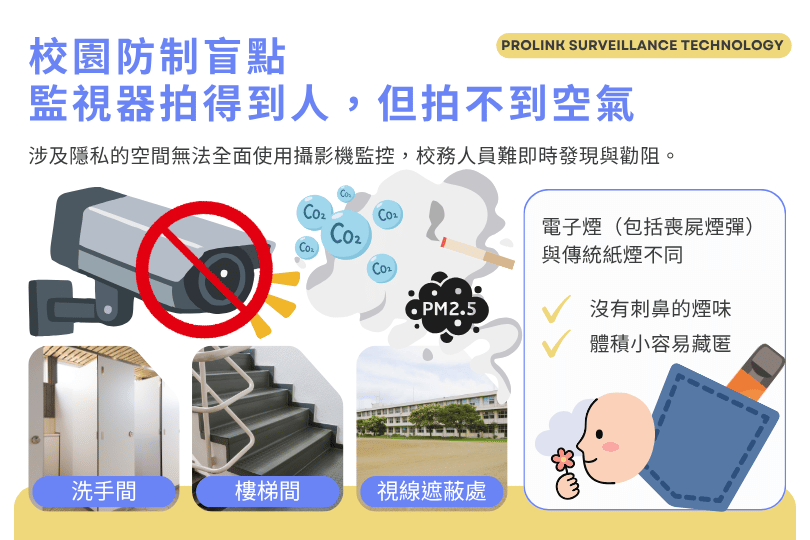
E-cigarettes (including zombie vapes) differ from traditional cigarettes —they have no pungent tar smell, the vapor disperses quickly, and the devices are small and easy to hide.
Many students vape in restrooms, stairwells, or other spots out of view,but these privacy-sensitive areas are exactly where cameras can't be installed,or they fall into blind spots in school management, making it hard for staff to catch and stop the behavior in real time.
Changes in the air — e-cigarette vapor, CO2 levels, PM2.5, and volatile organic compounds — never show up on camera footage, yet they are affecting students' learning environment.
Catching the Golden Window for Quitting: "Early Detection, Early Intervention" in Campus Vaping Prevention
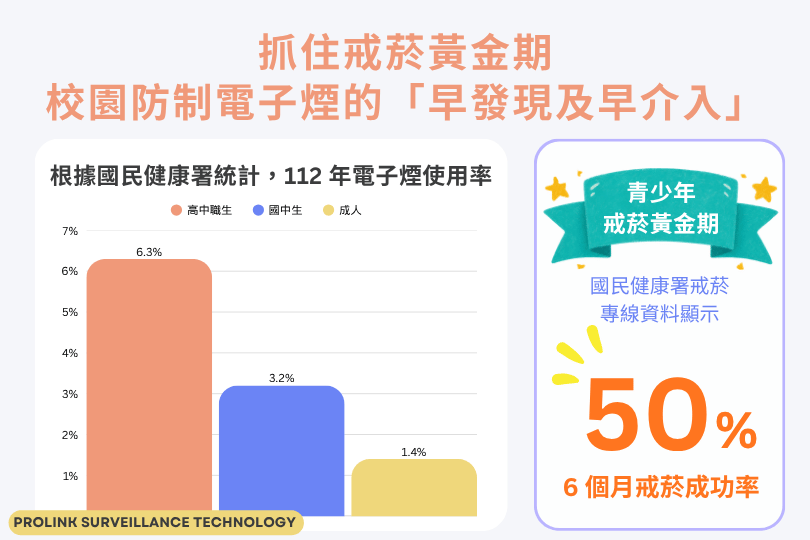
According to Taiwan's Health Promotion Administration, in 2023 the highest e-cigarette usage rate was amongsenior high and vocational school students (6.3%),followed byjunior high school students (3.2%),, both higher than the adult population.
Teens are easily drawn to e-cigarettes by peer influence and curiosity, but in the early stages of use,nicotine dependence hasn't yet taken hold, making this the golden window for intervention and quitting.Data from the Health Promotion Administration's smoking cessation hotline shows that teens who received counselingachieved a six-month quit success rate of up to 50%.
For teachers and school staff, the key to preventing emerging drugs really comes down to "early detection, early intervention."
So how should schools manage and prevent e-cigarette use that's spreading through campus blind spots?
How to Keep "Zombie Vapes" Off Campus: AXIS Technology Detects the Invisible
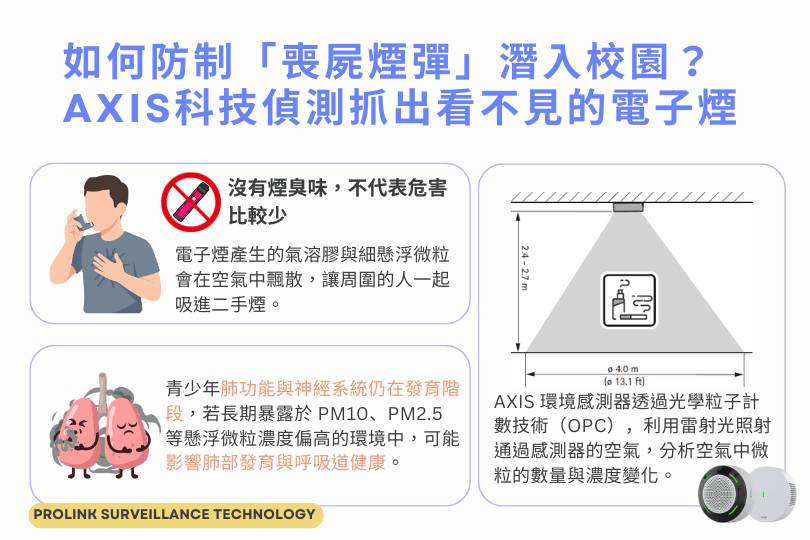
No smell doesn't mean less harm.
Many people assume that because e-cigarettes barely smell, they must be harmless. But theaerosols and fine particulatesthey produce still linger in the air, exposing everyone nearby tosecondhand smoke.
For teenagers, whose lungs and nervous systems are still developing, prolonged exposure to high concentrations of PM10, PM2.5, and other particulates can affect lung development and respiratory health.
AXIS environmental sensors useOptical Particle Counting (OPC) technology, shining a laser through the air passing through the sensor and analyzing the number and concentration of particles. This allows it to monitor PM1, PM2.5, PM4, PM10, and other particulates, andidentify aerosols produced by e-cigarettes — it can even detect smoke from traditional cigarettes.
This makes invisible changes in air quality visible in real time, so nothing can hide even when there's no smell to detect.
Beyond Vape Detection: Keeping Watch Over Campus Air Quality
Beyond detecting e-cigarettes and smoking, AXIS environmental sensors continuously monitor other key indicators that affect the campus environment, including:
VOC and NOx Detection
VOCs (volatile organic compounds) and NOx (nitrogen oxides) are commonly found in cleaning products, building materials, and vehicle exhaust. Prolonged exposure places extra strain on the respiratory system, affecting comfort and air quality for teachers and students in the classroom.
AXIS environmental sensors use Metal Oxide (MOX) sensing technology to track changes in VOC and NOx levels. The sensor analyzes the oxidation and reduction reactions produced by different gases, combined with humidity compensation, to distinguish between oxidizing and reducing gases and continuously monitor changes in the air.
CO2 Detection
When classrooms or indoor spaces are poorly ventilated, CO2 levels can rise, reducing concentration and learning efficiency. The sensor measures CO2 using a pulsed infrared light source whose wavelength is absorbed by CO2. Since the light pulses, the CO2 molecules it hits begin to vibrate and generate sound waves — the more CO2 molecules present, the larger the sound wave amplitude. A microphone measures this amplitude to calculate the CO2 concentration.
Environmental Condition Monitoring
Besides gases and particulates in the air, temperature and humidity are also important factors affecting the campus environment.
Temperature Detection
Tracks classroom temperature changes as a reference for air conditioning activation and energy management, helping maintain a comfortable learning environment.
Relative Humidity Detection
Excessive humidity encourages mold growth, while excessively low humidity can cause skin, eye, and respiratory discomfort, and may also shorten the lifespan of server room and campus equipment. Continuously monitoring humidity is therefore an essential part of environmental management.
AQI (Air Quality Index)
AQI (Air Quality Index) is a commonly used metric for assessing air quality. The system estimates AQI in real time using a NowCast weighted average of PM2.5 levels over the past 12 hours, then classifies air quality into levels, allowing schools to quickly grasp overall campus air conditions.
When Someone Vapes, the Footage Confirms It Instantly, Reducing Manual Workload
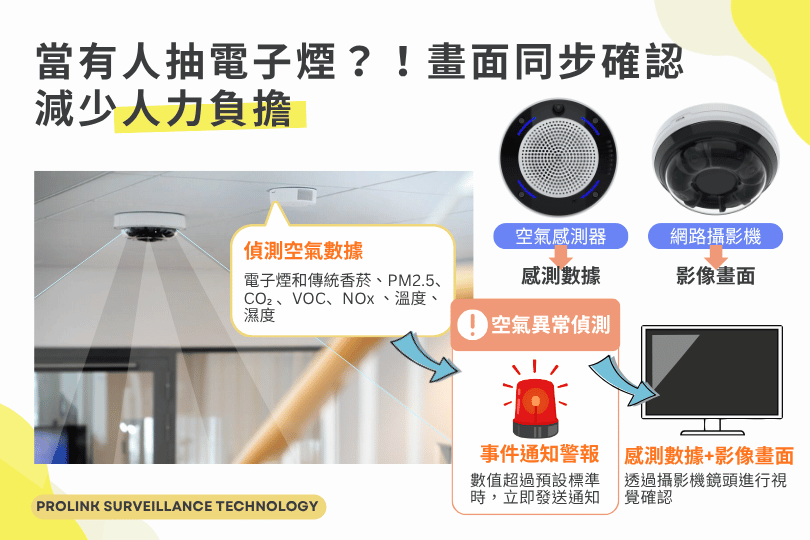
When someone vapes or smokes in a hard-to-notice area such as a restroom or stairwell, or when air quality readings exceed preset thresholds, the system immediately sends an event notification prompting staff to check the scene — instead of waiting for a complaint or for someone to feel unwell before the problem is discovered.
When paired with AXIS cameras, sensor data can be displayed alongside the video feed, allowing staff to visually confirm what's happening on-site through the camera for a clearer picture of the situation.
It can also integrate with AXIS network speakers to automatically play warning messages or on-site announcements, reminding smokers to stop and reducing the burden of staff having to patrol back and forth.
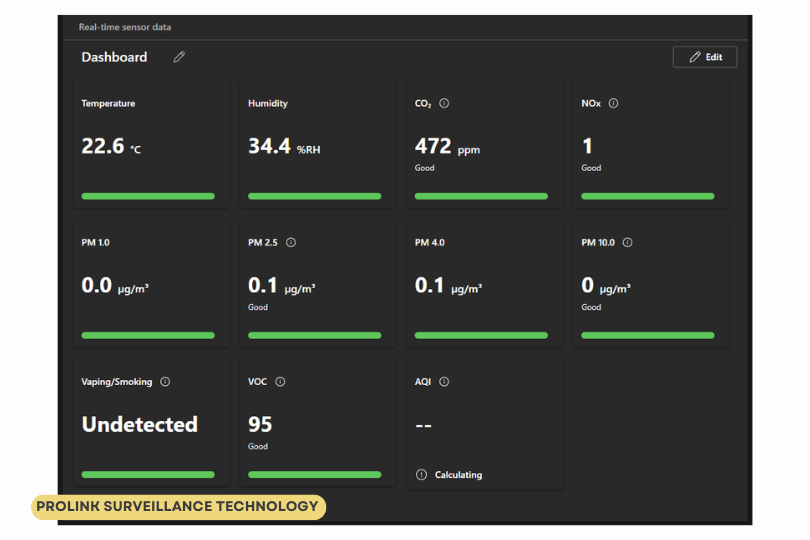
Data accumulated by this system can also be applied to:
✔ Campus Tobacco Prevention
Enforce campus no-smoking policies while keeping records for management and audit purposes.
✔ Air Quality Trend Analysis
Accumulate long-term environmental data to understand changes in campus air quality, identify problem hotspots, and guide improvement efforts.
No more relying solely on staff patrols for smoking issues, only to find the person already gone by the time they arrive.
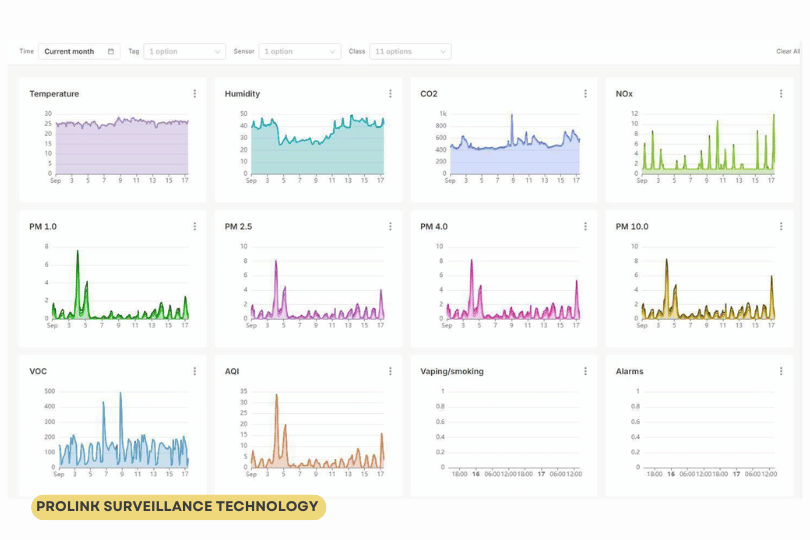
▲ Dashboard showing historical measurement data from AXIS air quality sensors.
It is also suitable for dormitories, shopping malls, offices, KTVs, nightclubs, bars, and other venues that need to maintain indoor air quality and no-smoking policies.