
● Only the temperature reading from the inner corner of the eye (periorbital area) is meaningful as a reference
● Glasses, hair, hats, and even masks can all affect temperature measurement
● Taking a temperature reading matters — taking an accurate one matters even more
Only the Temperature Reading from the Inner Corner of the Eye (Periorbital Area) Is Meaningful as a Reference
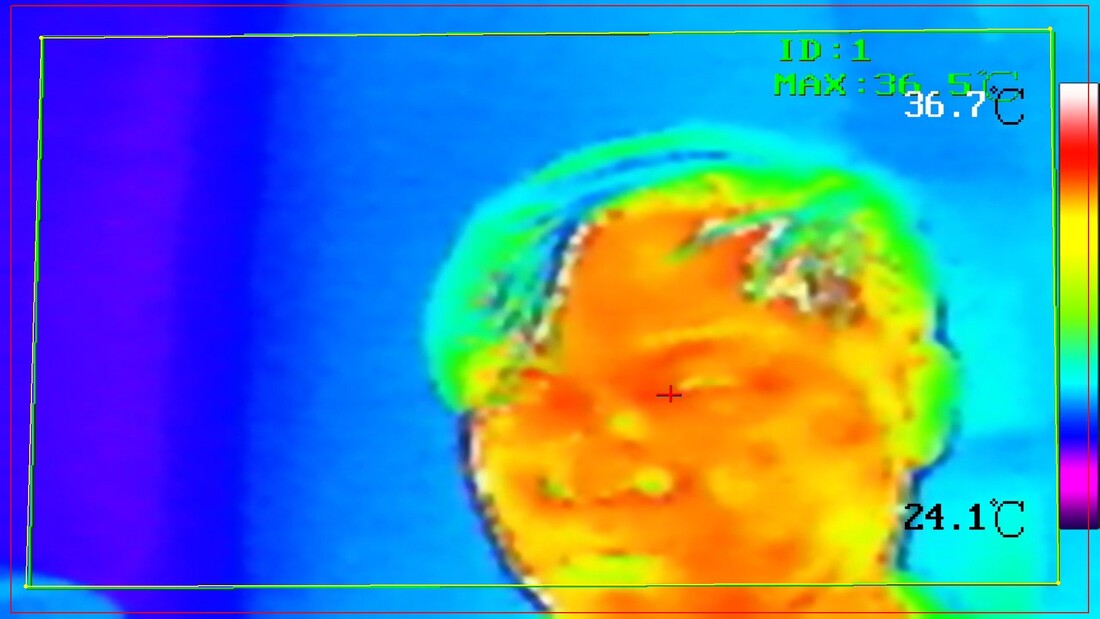
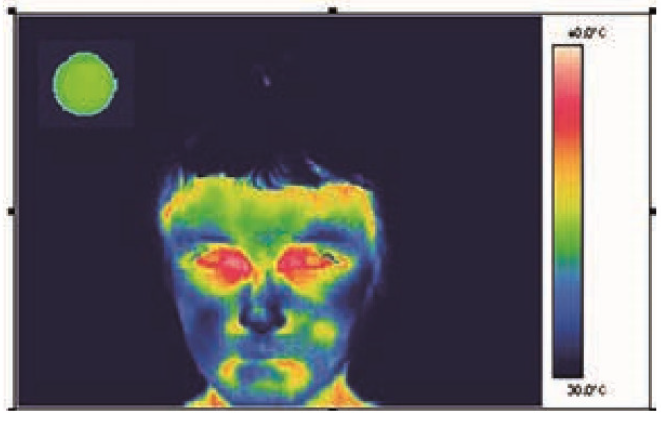
Since the outbreak of COVID-19 in early 2020, temperature screening has become an important first line of checks, using devices such as handheld forehead thermometers, ear thermometers, and infrared temperature sensors. According to ISO/TR 13154:2017, the most reliable place to measure human body temperature is actually the “inner canthus” (inner corner of the eye) region, because this area sits above the carotid artery, making its temperature more stable and reliable than other areas of the body. Other areas can show elevated or reduced surface temperature due to sweating or other external environmental factors. Below is an actual measurement taken with a thermal camera. The left image shows a person with a normal body temperature, with the thermal camera reading 36.5°C, while the right image shows a person with a fever, where the temperature around the eye socket is clearly higher than the surrounding areas.
Glasses, hair, hats, and even masks can all affect temperature measurement
To make temperature measurement more accurate, it's also important to avoid “covering the measurement area”
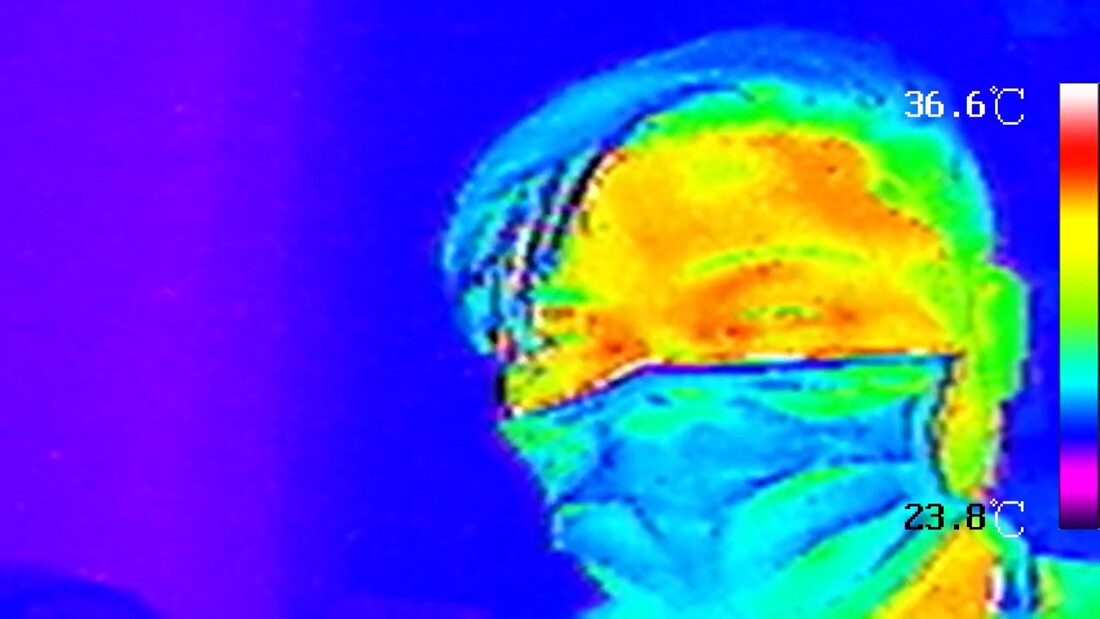
Anyone who has traveled abroad knows that automated border control requires removing glasses, hats, and other coverings to ensure accurate recognition. The same applies to temperature detection, since these items interfere with measurement accuracy. Below are test results from a thermal camera showing how various coverings affect thermal temperature readings.
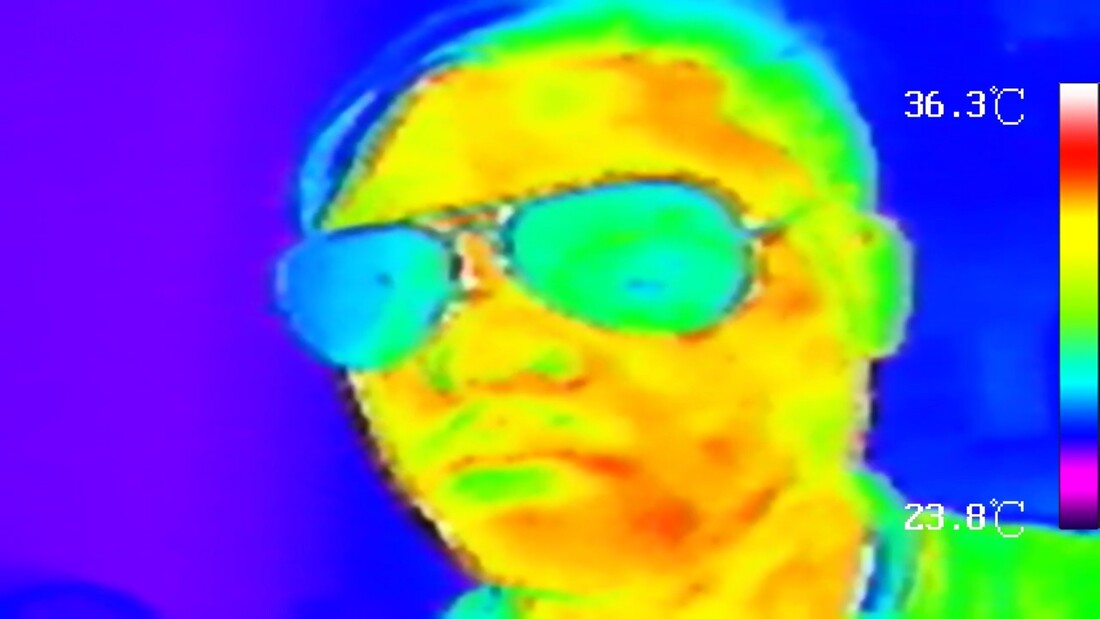
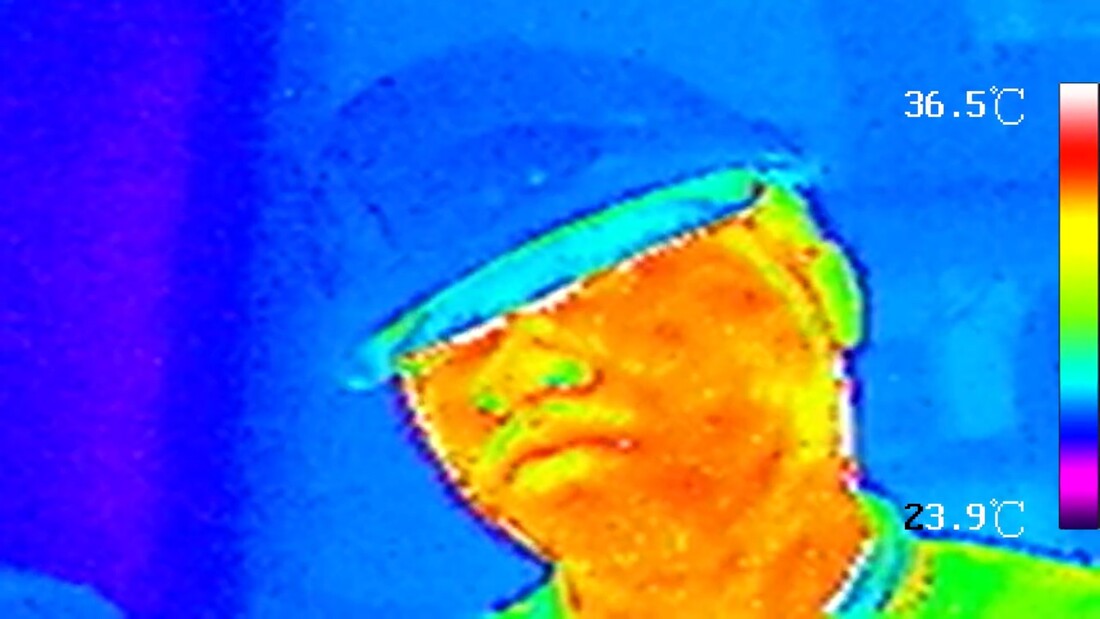
(Figure 1) Wearing sunglasses, the eye area is almost completely covered.
(Figure 2) When wearing a mask, the warmth from exhaled breath is reflected back onto the face, causing the detected reading to be higher.
(Figure 3) A hat covering the head prevents the eye area from being measured.