
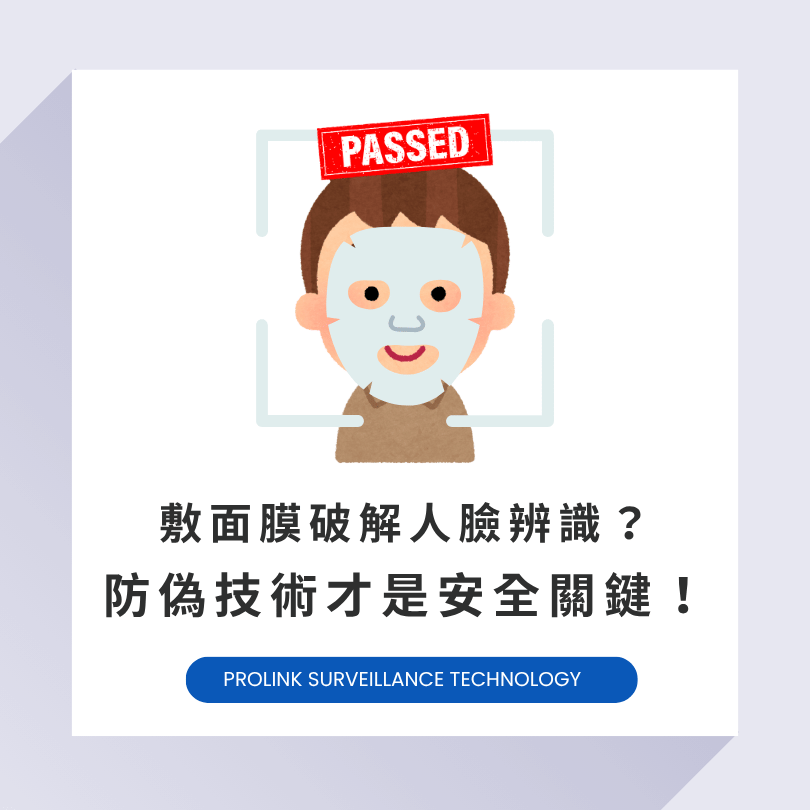
A recent news story about a delivery rider wearing a face mask to successfully pass a platform app's facial recognition verification and hijack an account has drawn public attention to the security of facial recognition.
This isn't the first such incident — there have been previous cases of people using a phone photo to bypass self-service boarding systems. The common thread behind these cases is that the system relies only on 2D image matching, which is effectively like recognizing a flat photo: as long as the facial contours “match,” verification may pass. This means a photo, a video screenshot, or even a face mask could potentially slip through.
When a system cannot effectively verify whether someone is a real person, it may, inaccess control, attendance management, and public surveillanceand other such applications, leave behind an exploitable security vulnerability.
As a result, a facial recognition system's“anti-spoofing capability”has become a critical benchmark. Next, let's take a deeper look at how it works, the differences between 2D, 3D, and liveness detection technologies, and what it takes to build a truly secure and reliable facial recognition system.
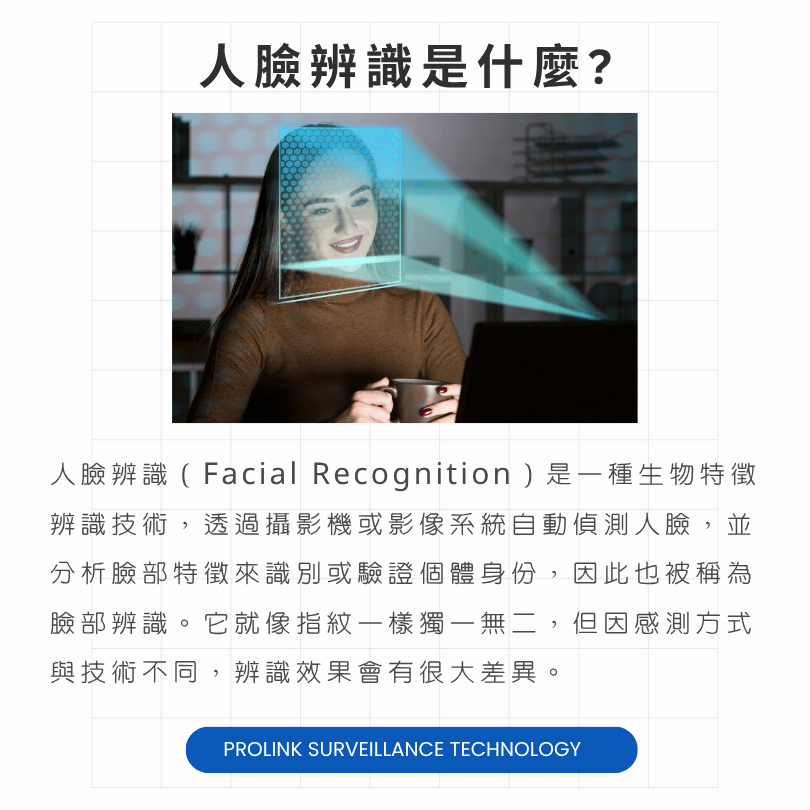
▌ What Is Facial Recognition and Where Is It Used?
Facial recognition is a biometric identification technology that uses a camera or imaging system to automatically detect a face and analyze its features to identify or verify an individual's identity. Like a fingerprint, it is unique to each person, but recognition performance can vary greatly depending on the sensing method and technology used.
As AI and video recognition technology mature, facial recognition is now widely used across many fields, including:
- Access control and attendance systems
- Mobile device face unlock and payment verification
- Public safety and smart security surveillance
- eKYC identity verification and fintech services
- Customer analytics and targeted marketing in smart retail
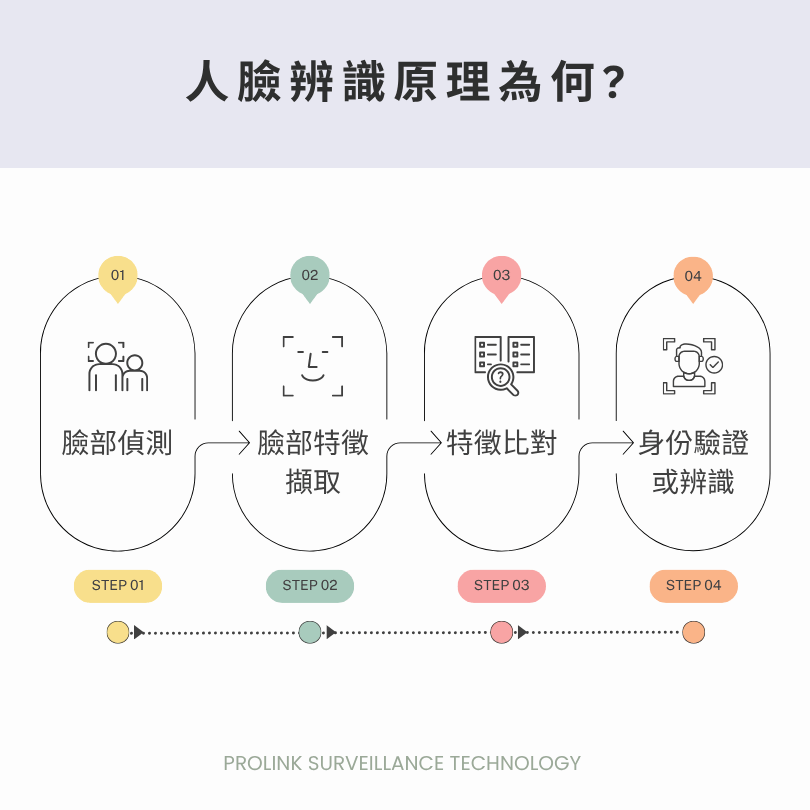
▌How Does Facial Recognition Work?
The core principle of facial recognition can be broken down into four steps:
1. Face Detection:
Determines whether a face is present in the image or scene and locates the relative positions of facial features such as the eyes, nose, and mouth.
2. Facial Feature Extraction:
Analyzes the geometric features and structure of the face — such as eye spacing, nose width and height, lip position, chin shape, and cheekbone contours — and converts them into a unique digital feature vector. This vector acts like each person's own “faceprint,” functioning similarly to a fingerprint for identification.
3. Feature Matching:
The system compares the newly captured facial feature vector against facial data already stored in the database to calculate a similarity score.
4. Identity Verification or Recognition:
A one-to-one match, such as unlocking a phone, is identity verification — confirming whether the user is who they claim to be. Finding a match among many records, on the other hand, is identity recognition — determining who the person is.
▌ What Facial Recognition Technologies Exist? Comparing 2D, 3D, and Liveness Detection
2D Facial Recognition
The most basic form of facial recognition uses a standard 2D camera to capture a flat image of the face and analyze the position and proportions of 2D features like the eyes, nose, and mouth. It's commonly found in surveillance systems and the face-unlock feature of mid-range and entry-level Android phones.
Pros:
- Uses relatively simple algorithms, keeping costs low.
- Easy to deploy, widely adopted, and broadly applied.
Drawbacks:
- Low security — cannot assess depth or vital signs, and is easily fooled by photos, videos, or masks.
- Susceptible to interference from lighting, angle, expression, makeup, glasses, or masks, which affects recognition accuracy.
- Cannot distinguish a real person from a fake one, as it lacks liveness detection.
3D Facial Recognition
A more advanced technology than 2D, it captures a flat image while also using 3D sensing to obtain depth information and build a 3D model of the face. This technology is commonly used in high-security scenarios such as mobile face payment (e.g., Face ID), financial institution identity verification, and high-security access control systems. Common technologies include:
- Structured Light: Projects tens of thousands of invisible light points onto the face and calculates depth based on how the points deform, as used in Apple Face ID.
- Time-of-Flight (ToF): Uses infrared light to measure the time it takes for light to reflect back and calculate distance, commonly found in phone front cameras, facial recognition devices, and some high-end surveillance cameras.
- Binocular Stereo Vision: Uses two lenses to mimic human eyes, inferring depth by calculating the difference between images from different viewpoints, mainly used in surveillance cameras and machine vision systems.
Pros:
- High security — captures the face's 3D structure, contours, surface relief, and skin texture, making it difficult to spoof with a flat photo or video.
- Strong anti-spoofing capability, with liveness detection that effectively distinguishes a real person from a fake.
- Adapts well to changes in lighting and angle, with less sensitivity to environmental factors.
- High recognition accuracy, since the richer data dimensions allow more features to be extracted.
Drawbacks:
- Requires a camera capable of sensing the face's 3D structure, such as a device using structured light or ToF technology, resulting in higher equipment costs.
- Computation is more complex, requiring stronger processing power to handle 3D data.
- Some highly realistic 3D-printed fake faces can still be difficult to detect.
▌What Is Liveness Detection? How Does It Address the Gaps in 2D and 3D Facial Recognition?
Liveness detection is a key anti-spoofing technology in facial recognition, designed to determine whether what's in front of the camera is a genuine living person rather than a forgery such as a photo, video, mask, or 3D model.
Common verification methods include:
- Detecting natural movements such as blinking, mouth corner movement, and changes in expression.
- Analyzing subtle changes in skin texture and blood flow.
- Using infrared or depth sensing to identify the face's 3D structure.
- Requiring users to perform specific actions, such as nodding or turning their head.
These technologies can generally be grouped into the following types: interactive, physiological, depth-sensing, and multimodal fusion. Their core design goal is to strengthen a recognition system's defense against spoofing attacks and improve the accuracy and security of distinguishing real from fake.
Pros:
- Effectively blocks spoofing attacks using photos, videos, or masks, strengthening the security line of defense.
- Suitable for high-security scenarios such as financial transactions, access control, and identity verification.
- Enhances user trust and complies with biometric regulatory requirements.
Drawbacks:
- Relatively higher technology cost and equipment requirements.
- Requires a certain level of lighting stability and camera lens quality.

▌From Access Control to Surveillance: FaceMe's Anti-Spoofing Technology Builds a Smart Recognition Defense Across Industries
FaceMe® is a globally leading AI facial recognition engine independently developed in Taiwan, widely used in access control, public surveillance, fintech, and personal devices, offering high accuracy, anti-spoofing capability, and highly flexible deployment.
- Industry-Leading Accuracy: Certified by NIST internationally, with recognition accuracy up to 99.83%.
- Recognition Even with Protective Gear: Maintains up to 95% accuracy even when wearing a mask, goggles, or a helmet, suitable for high-protection environments such as healthcare and industrial settings.
- Certified to ISO 30107-3 Level 2 Presentation Attack Detection (PAD):
100% detection success rate against 3D fake-face attacks。
Supports 2D camera AI detection, IR + depth dual cameras, and active/passive recognition。
Can identify deepfake forged images, providing over 98% recognition accuracy for genuine users。
- Ultra-Fast Response: Completes identity verification within 0.1 seconds, ideal for environments requiring high real-time performance.
- Cross-Platform Deployment x Flexible Integration:
Supports Windows, Linux, Android, and iOS operating systems。
Compatible with a wide range of SoC and AI chip platforms。
Provides a complete SDK and API to speed up development and integration。