
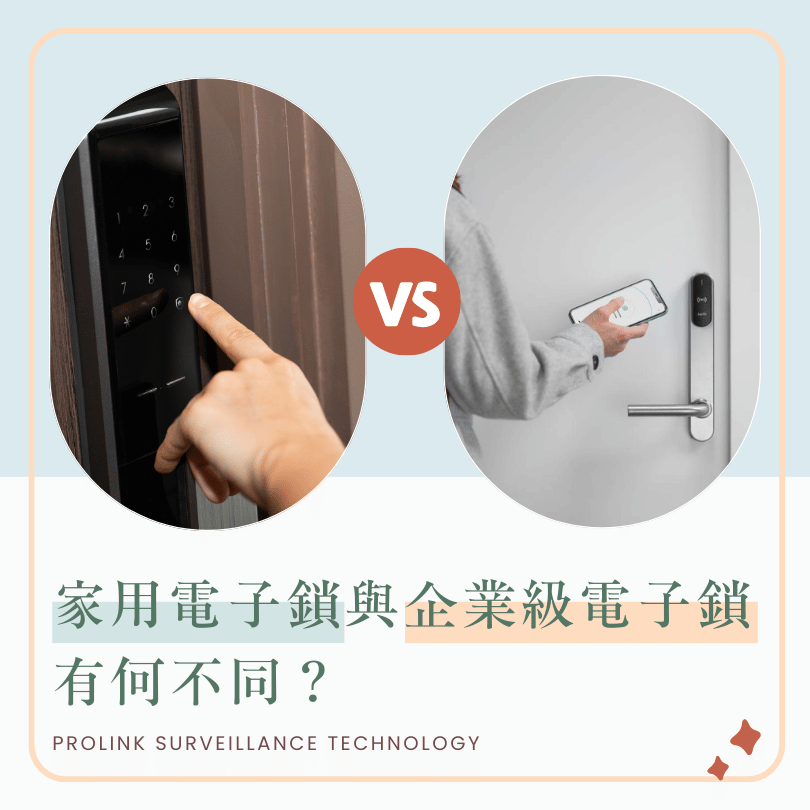
When some companies build new employee dormitories, the contractor often throws in residential electronic locks. On the surface, this seems convenient — employees can enter using a fingerprint or passcode, just like at a hotel.
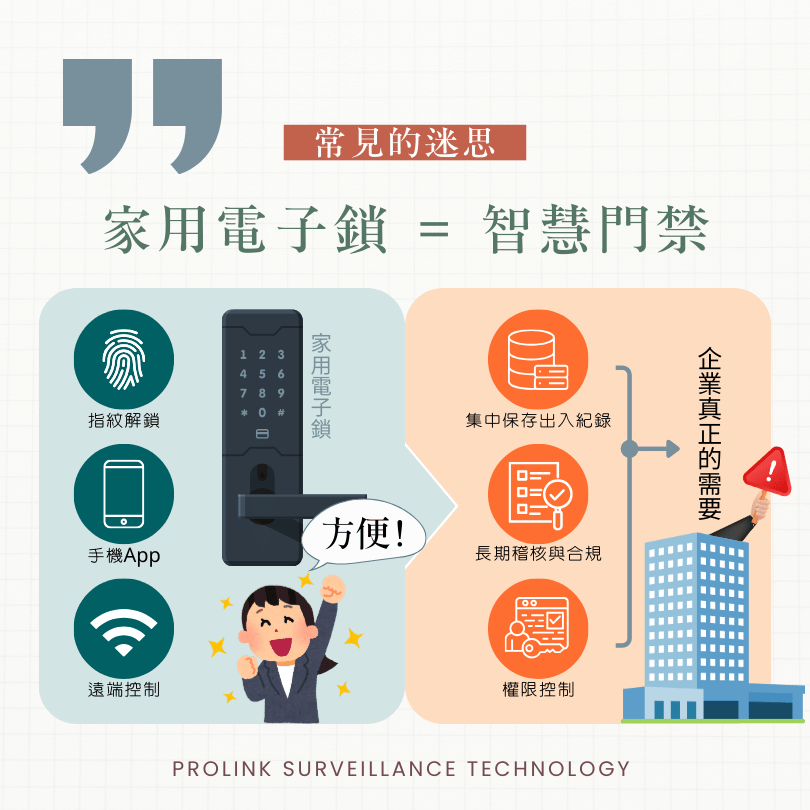
In an actual case at one company dormitory, the contractor-provided residential lock stored all entry/exit records locally on the lock itself. To review them, a manager had to go on-site and operate the lock directly to download the data — neither real-time nor convenient. If an employee had an accident, it would be difficult to quickly determine who entered or exited and when. Regulations also require companies to retain such records for a period of time to support labor inspections or after-the-fact verification.
This kind of design is fine for home use, but falls short in a corporate environment, where what's needed is an access management mechanism that offers centralized storage, real-time lookup, and auditability.
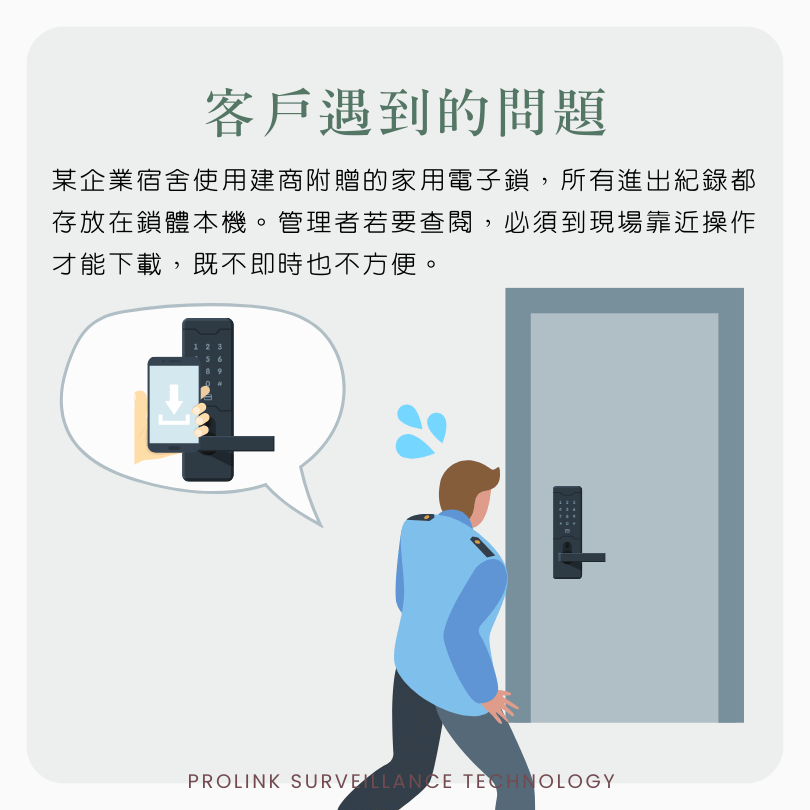
A Common Misconception: Residential Electronic Locks = Smart Access Control
Residential electronic locks are often confused with smart access control systems. Many people, upon seeing features like fingerprint unlocking, a mobile app, or remote control, intuitively assume the lock already provides complete smart access management.
- Common Misconception:Being able to view records remotely is assumed to mean complete tracking and management.
- The Reality:Residential electronic locks have limited record storage. Once capacity is reached, new records overwrite old ones — the design is meant for short-term review, not long-term auditing or centralized storage.
By comparison, businesses have much stricter security management requirements:
- They need to retain complete entry/exit records long-term to meet auditing, compliance, or internal control requirements.
- They must centrally manage all access data, support permission control across multiple sites and personnel levels, and integrate with security or surveillance systems.
In addition, when considering access control solutions, many companies instinctively think of “card reader + wiring + drilling” installation work, and so view residential electronic locks as a cheaper, more convenient alternative.
For businesses that want fast deployment, no damage to existing interiors, and centralized, real-time auditing, SALTO's wireless smart electronic locks from Spain are a mature option — and a common choice among office buildings and five-star hotels in Taiwan today.
Next, let's look at the differences between residential and enterprise-grade electronic locks.
Differences Between Residential and Enterprise-Grade Electronic Locks
Residential Electronic Locks: Convenient but Limited Capacity
Residential electronic locks are designed with a focus on power savings and convenience, so their record-keeping is typically limited. There are two common types:
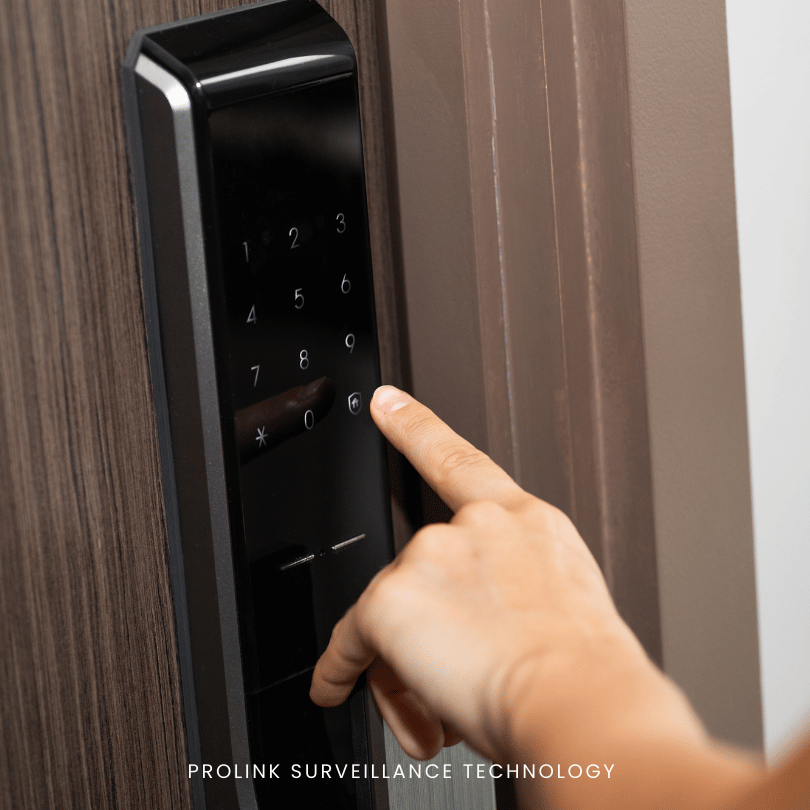
- Bluetooth Type
• Pros:Low power consumption, simple installation, no extra networking equipment required.
• Drawbacks:Records are stored on the lock itself; once capacity is reached, new records overwrite old ones. To view them, you must be near the lock and use a mobile app to download the data via Bluetooth — real-time remote viewing isn't possible.
- Wi-Fi Type
• Pros:Can upload records to the cloud in real time; managers can check them anytime via the app and remotely modify or remove guest permissions.
• Drawbacks:Due to higher power consumption, batteries need to be replaced more often, or an external power source is required.
Overall, residential electronic locks have limited memory, designed for short-term review by residents. Long-term storage or large volumes of records still depend on a mobile app or cloud service.
The core value of a residential electronic lock: convenient access for family members and protection for household members and property.
SALTO Enterprise-Grade Electronic Locks: More Than Just Opening Doors — Complete Management
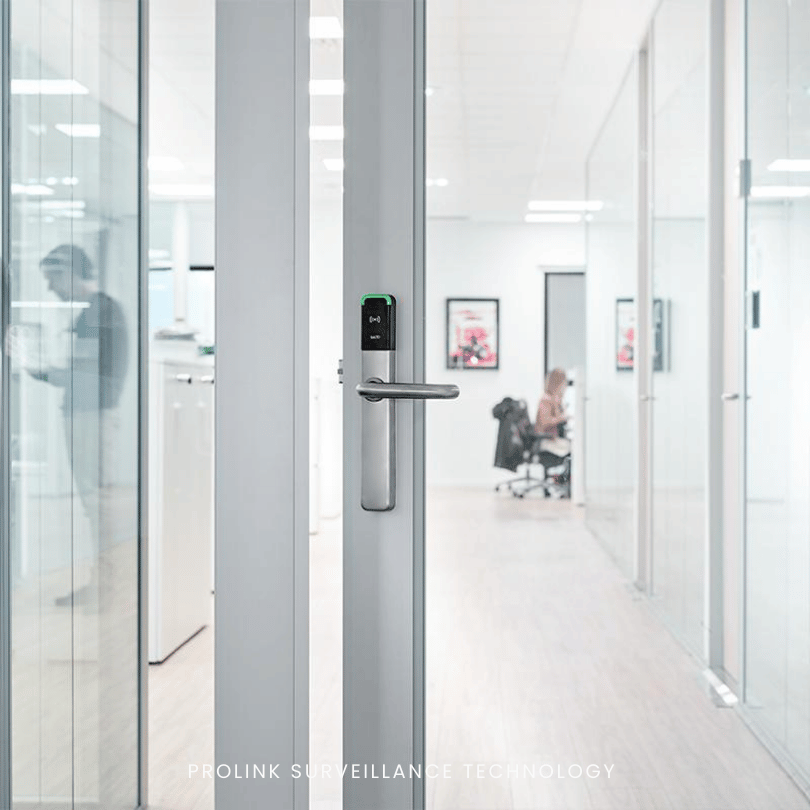
Pros:
- International Brand Assurance: A leading smart lock manufacturer from Spain with mature technology, certified to GDPR and ISO 27001 security standards.
- Remote Smart Management: Monitor access status anytime, anywhere, with records automatically uploaded to the server for long-term storage, supporting audits, labor inspections, and internal controls.
- Flexible Access Control: Set permissions by department, individual, or time slot, with instant activation or deactivation — ideal for personnel changes and visitor management.
- Multiple Unlocking Methods: Supports RFID, NFC, Bluetooth, and mobile app keys.
- High Security: Encrypted communication, drill- and tamper-resistant, with fire/escape functions, and AMOK mode to ensure safety during emergencies.
- Easy Installation: Wireless transmission eliminates large-scale wiring, suitable for a variety of interior designs.
- Auto-Lock: Locks automatically when the door closes, preventing it from being left unlocked.
- Integration: Open API that connects with HR, attendance, surveillance, room control, and reservation systems.
- Durable Battery: 1-2 year lifespan, with low-battery alerts and quick replacement.
- Wide Range of Applications: Available in multiple specifications for offices, dormitories, hotels, and more.
Drawbacks:
- Higher upfront investment, but delivers greater security and management efficiency.
- Wireless network planning is needed to ensure stable signal coverage.
The core value of an enterprise-grade electronic lock: letting managers track entry/exit records in real time, protecting the safety of personnel and premises across the organization.