Last time, we published“What's the Difference Between Residential and Enterprise-Grade Electronic Locks?”an article introducing SALTO's enterprise-grade electronic locks from Spain. They are used not only in major European hotels such as the Tayko Hotel and Four Seasons Hotel Ritz, but have also been successfully deployed in numerous hotels and shared spaces in Taiwan with integrated access control systems.

After the article was published, a customer raised a question:
“After a permission change in SALTO, does the access card need to be tapped at an Update Point before it takes effect? In other words, is it not possible to grant or revoke access in real time for offline wireless locks?”
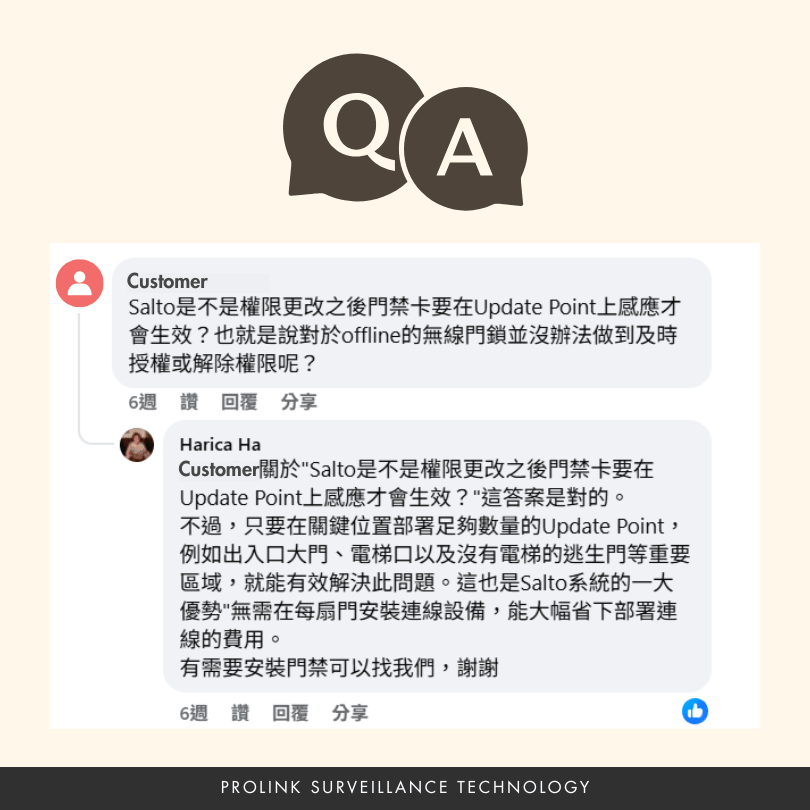
This is actually a common question about how authorization takes effect in SVN (SALTO Virtual Network).
As long as thedeployment locationsandquantityof Updater Points are properly planned, it's possible to ensure efficient authorization synchronization while saving substantial wiring and installation costs, making it especially suitable formanufacturingorlarge factory facilities— environments where wiring is difficult.
▍SALTO SVN Technical Features
Data-on-Card: The Core Concept
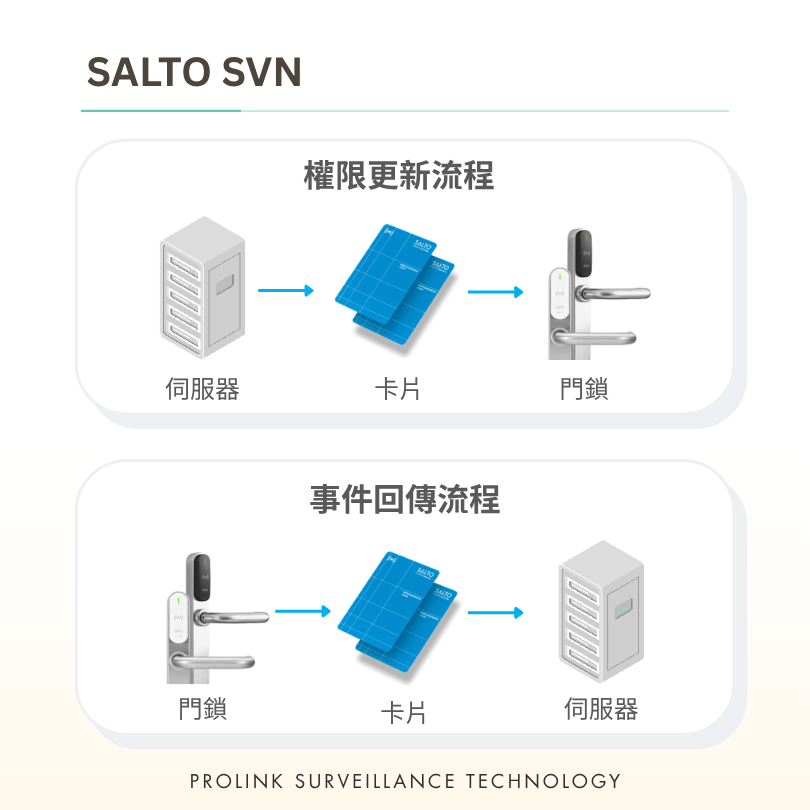
- The SVN system is built on Data-on-Card technology, storing access data directly on the physical access card.
- The access card carries data between offline locks and the system, determining when permission updates take effect. In short, the card itself is the data carrier.
Offline Locks and Updater Points
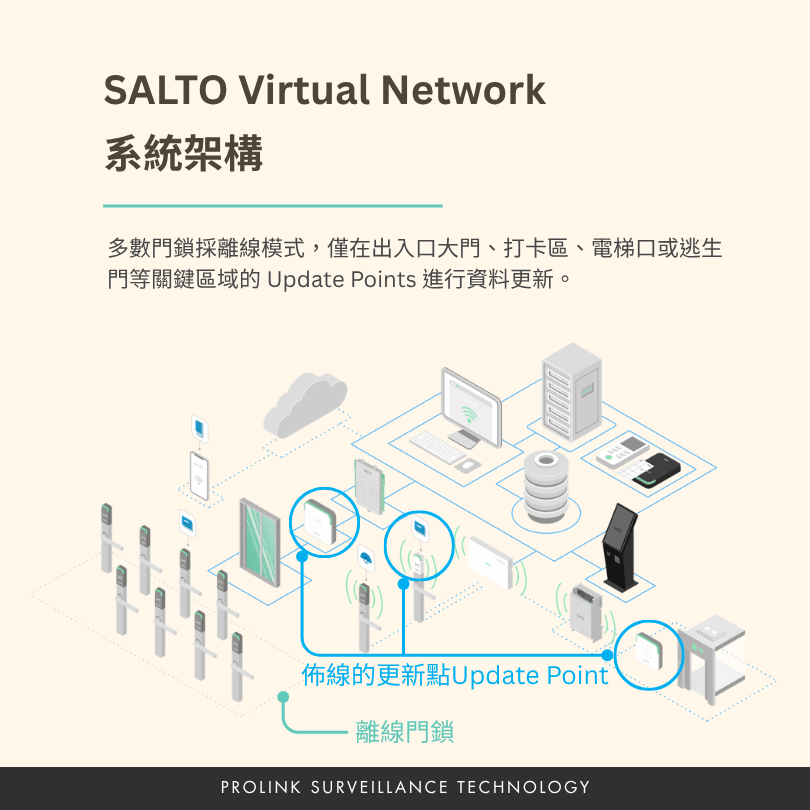
- Most locks operate offline, updating data only at designated Updater Points.
- SVN's online card readers connect to the network and serve as “Updater Points” for user cards.
- An Updater Point can be a wall-mounted reader or a lock that supports SVN-Flex.
- Even if the network goes down, battery-powered locks continue to operate normally.
Authorization Process and Two-Way Data Transfer
- When a user taps their card at an Updater Point, the system writes the latest authorization onto the card.
- When the card is tapped at an offline lock, it also collects event records such as access denials and battery status, which are sent back to the server at the next update.
Denylist Mechanism
The system can synchronize a denylist; when a card is deactivated or reported lost, its card number is added to the denylist.
Denylist information is written onto other users' cards via Updater Points and gradually synchronized to offline locks through everyday use, ensuring invalid cards are blocked even without a network connection.
Core Design Philosophy: A Hybrid Architecture
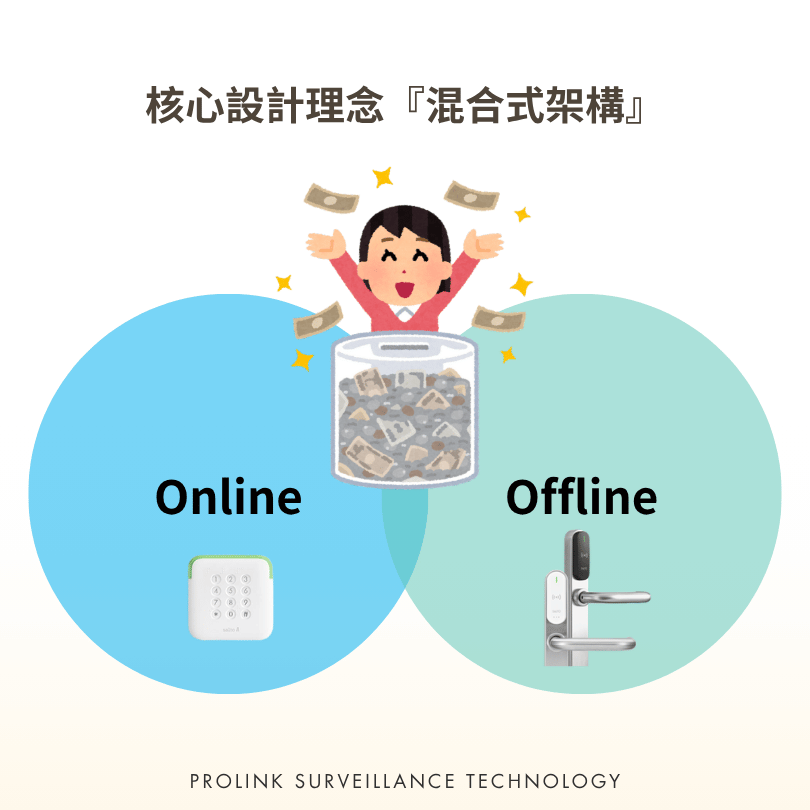
The system combines wireless offline locks with wired online access points, striking a balance between cost-effectiveness and security.
▍Frequently Asked Questions
“After an employee leaves, we delete their access rights, but if they never tap an Updater Point, can't they still open the door?”
“Or if a tenant moves out but their card is never tapped for an update, can't they still come and go freely? Doesn't that create a security gap?”
▍Don't worry — this is exactly where SALTO's strength lies!
Most access control systems store authorization data on a server or controller, requiring a network connection to every door. SALTO's SVN Data-on-Card architecture takes the opposite approach, securely storing authorization information on the card itself, so the system remains secure even in offline environments.
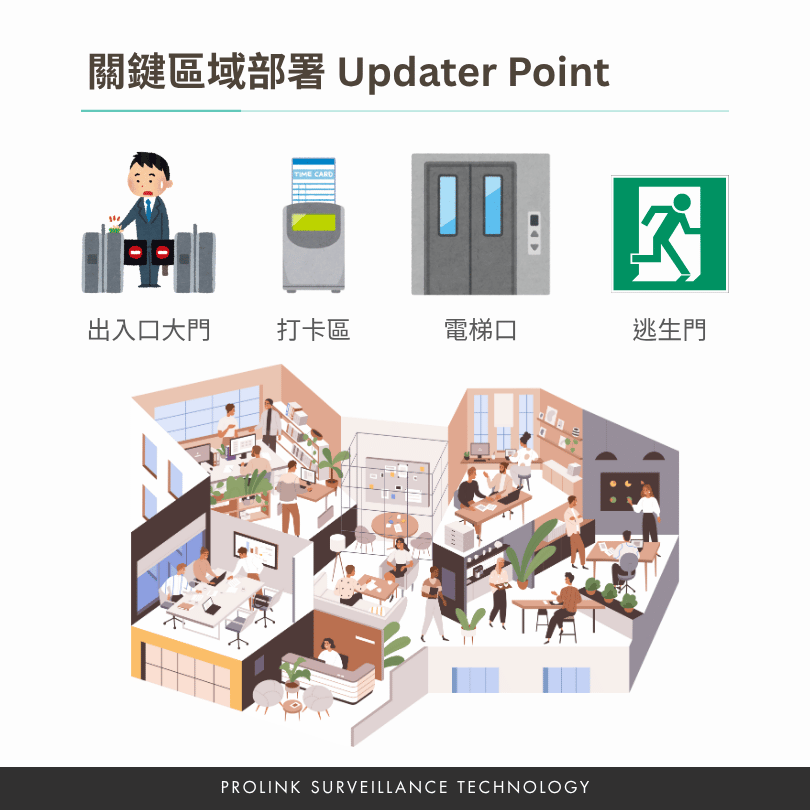
By deploying Updater Points only at key locations
it's possible to balance security and cost-effectiveness,saving substantial wiring and installation costs.
For example: main entrances, time-clock areas, elevator lobbies, or fire exits.
Secure Access Control Even While Offline
Access decisions are made based on the latest authorization stored on the card, maintaining secure control and meetingthe needs of environments with limited network coverage.
- Offline Locks: Handle locking and unlocking to reduce costs.
- Online Access Points: Serve as data relay stations, handling synchronization and updates.
Suitable Applications
Suitable for dormitories, historic buildings, warehouses, and other locations where wiring is difficult, as well as non-standard openings such as server racks, lockers, and data room doors.

SALTO's unique SVN Data-on-Card mechanism lets both “authorization updates” and “event reporting” be handled through the card, achieving maximum security management efficiency with minimal network wiring — an access control solution that balances cost, stability, and security.
So what if a business needs “real-time authorization” or “remote unlocking”?
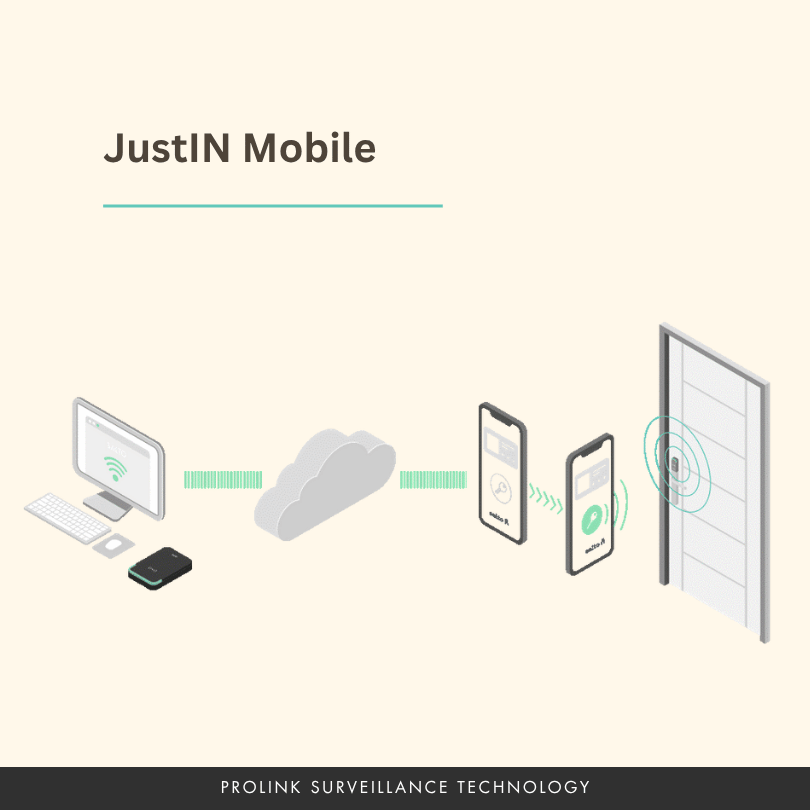
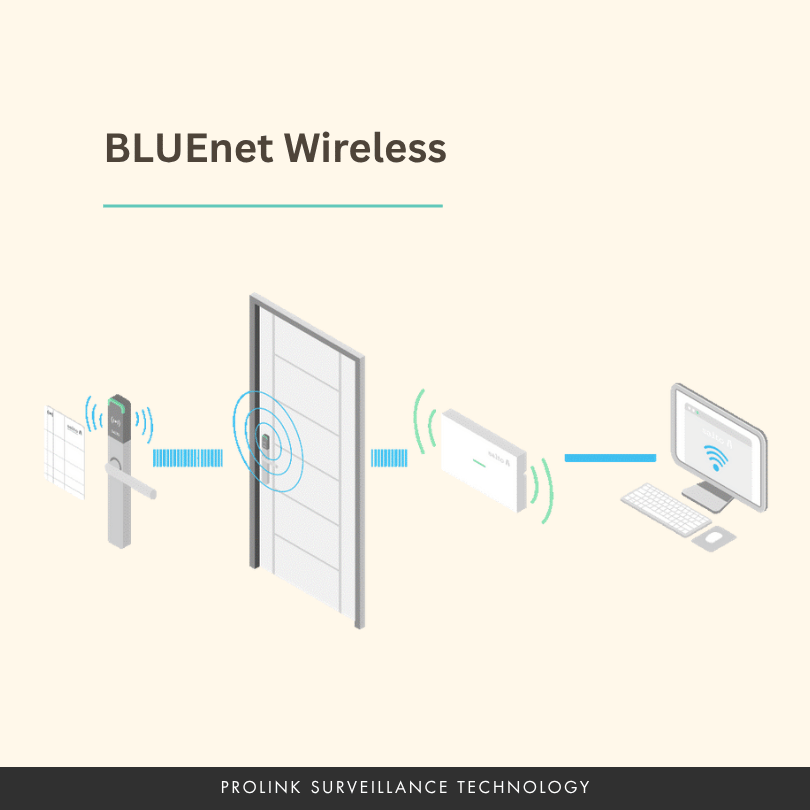
In that case, it can be paired with SALTO's BLUEnet Wireless or JustIN Mobile technology.
- BLUEnet Wireless (Bluetooth Wireless Technology): Enables locks to communicate with the server in real time, synchronizing instant authorization, access revocation, or remote unlocking.
- JustIN Mobile: Delivers authorization as a digital key via a mobile app, letting users get the latest permissions anytime without a physical card or Updater Point.