Northern Taiwan Gas Power Plant Deploys AI Virtual Fence, Effectively Reducing False Alarms by 70% and Doubling Effectiveness!
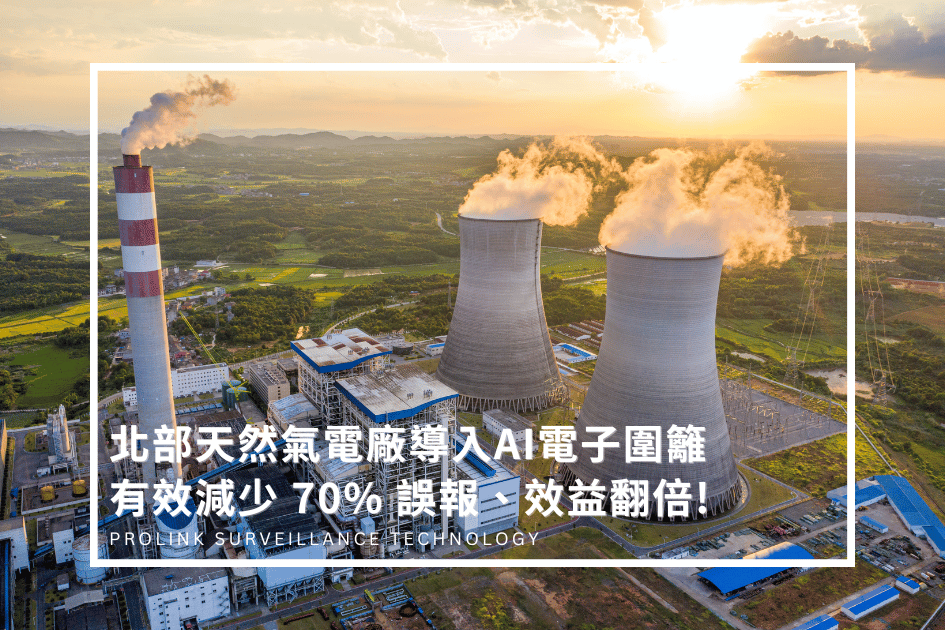
This deployment took place at a natural gas power plant in northern Taiwan, a national-level piece of critical infrastructure that suppliesone-third of northern Taiwan's electricity. Because the site is large and has a complex perimeter structure, the traditional IVS virtual fence previously in use generated frequent false alarms that wore down security staff, gradually eroding trust in the system until it was ultimately taken out of service, causing actual protection effectiveness to drop significantly.
To improve perimeter security and alarm reliability, the plant chose us to deploy an AI virtual fence system,and after deployment, false alarms dropped by more than 70%, significantly improving security efficiency!
What Is a Virtual Fence?
A virtual fence system (Perimeter Security System)is a virtual perimeter detection technology commonly used to protect the entrances, boundaries, or restricted areas of important sites. Using cameras, sensors, or positioning systems, it automatically triggers an alarm when a person or object crosses a preset zone, achieving intrusion detection and real-time alerting.
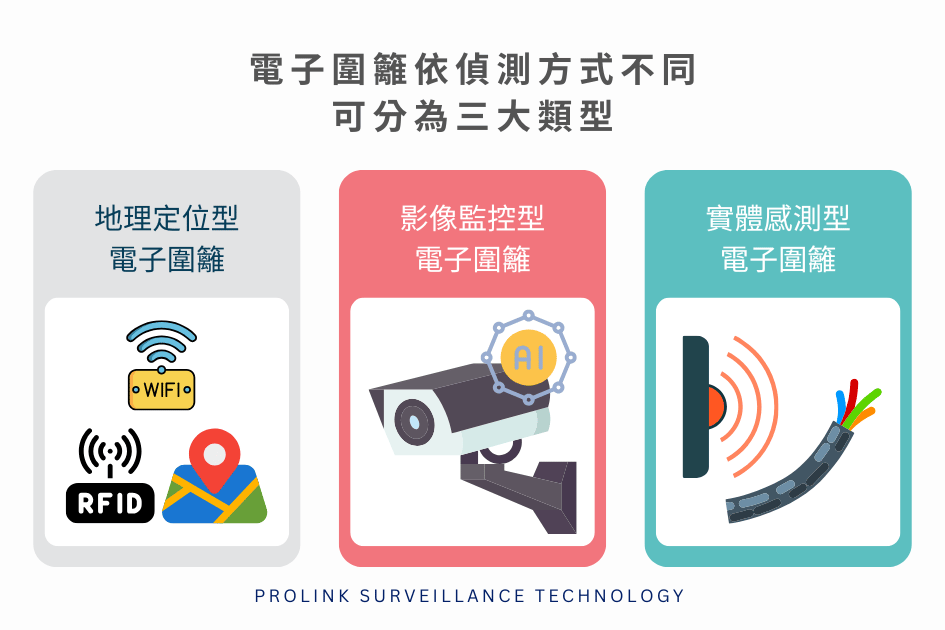
Virtual fences are currently divided into three main types based on their detection method:
- Geolocation-Based Virtual Fences
Using GPS, RFID, Wi-Fi, or cellular signals to draw a virtual boundary on a map. Common applications include epidemic tracking and no-fly zone management for drones. - Video Surveillance-Based Virtual Fences
A video surveillance-based virtual fence uses the camera's field of view to draw a virtual alert zone within the footage, triggering an alarm when a person or vehicle enters the designated area. It can be paired with traditional IVS or AI video analytics to detect abnormal behavior such as intrusion, loitering, or direction of travel, and is currently one of the most widely used technologies for perimeter protection among enterprises. - Physical Sensor-Based Virtual Fences
Combining infrared beam sensors, vibration-sensing cables, microwave radar, and similar equipment, an alarm is triggered as soon as contact or interruption is detected, commonly used in high-risk sites.
Of these, videosurveillance-based virtual fencesare the method used in this case study, using surveillance cameras to capture the detection area and drawing a virtual boundary for intrusion monitoring.
This case further combines AI technology for video analytics, upgrading to an AI virtual fence that can identify whether a target is a person, vehicle, or animal, enabling real-time alerts, reducing false alarms, lowering the burden of manual patrols, and offering fast deployment with high flexibility.
Where Is an AI Virtual Fence Best Applied?
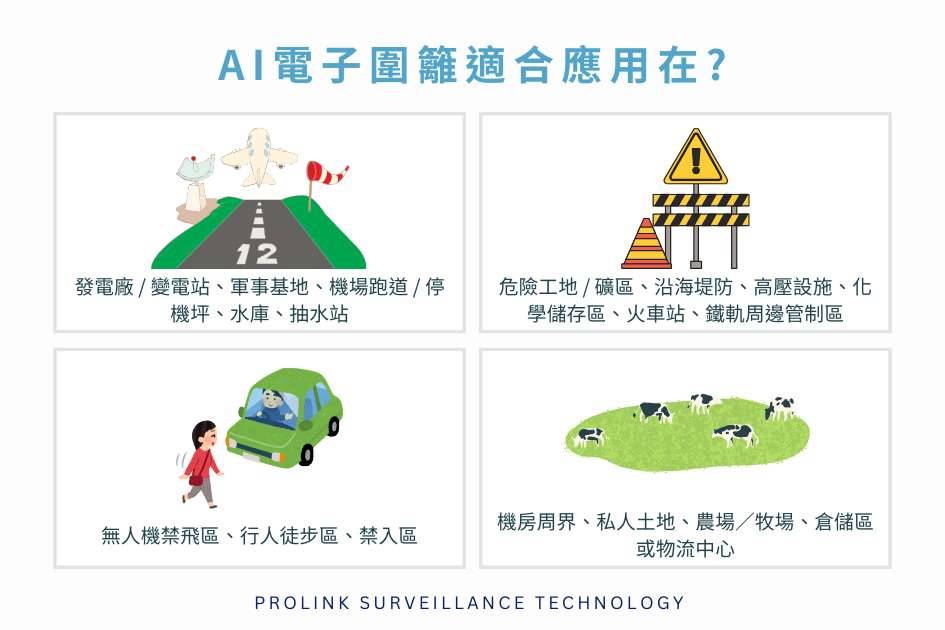
- Critical Infrastructure Areas
Power plants / substations, military bases, airport runways / tarmacs, reservoirs, pumping stations - High-Risk Work Areas
Hazardous construction sites / mining areas, coastal levees, high-voltage facilities, chemical storage areas, train stations, restricted areas around railway tracks - Restricted and Controlled-Access Areas
Drone no-fly zones, pedestrian zones (to prevent vehicle intrusion), restricted / prohibited areas (such as military zones) - Private Asset Protection Areas
Server room perimeters, private land, farms/ranches, warehouses, or logistics centers
Why Power Plants Deploy Virtual Fences
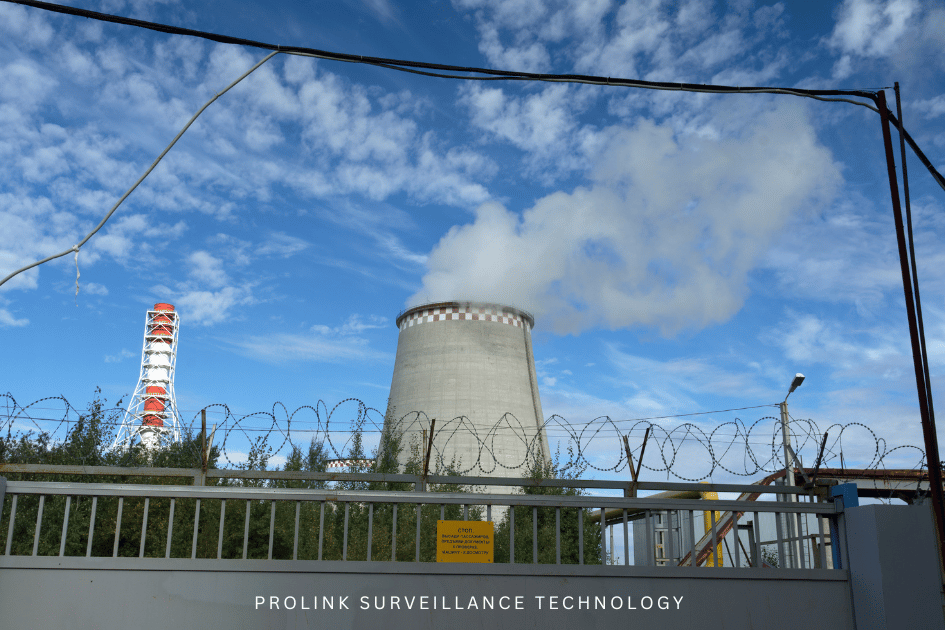
A power plant is a core part of national energy infrastructure. Any illegal intrusion, equipment sabotage, or safety incident could cause serious power outages and losses. This is why multi-layered protection through a virtual fence is needed, with goals including:
- Preventing potential sabotage, theft, or terrorism risks
- Isolating hazardous zones to prevent personnel from accidentally entering and causing safety incidents
- Protecting high-value equipment and critical facilities
- Establishing security access tiers so that only authorized personnel may enter
- Meeting government regulatory requirements for security at energy facilities
- Reducing reliance on manual patrols, freeing up staff to focus on critical operations
Why Are Traditional Virtual Fences Not Effective?
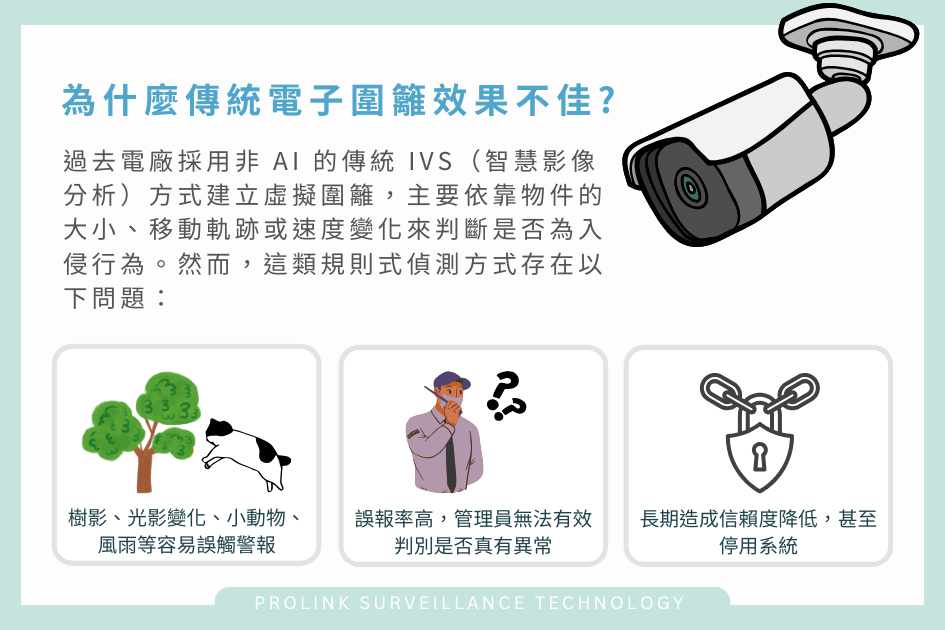
In the past, power plants mostly built virtual fences using traditional, non-AI IVS (intelligent video analytics), relying mainly on an object's size, movement trajectory, or speed to determine whether it was an intrusion. However, this rule-based detection approach has the following problems:
- Tree shadows, changes in lighting, small animals, wind, and rain can easily trigger false alarms
- A high false alarm rate makes it difficult for staff to effectively determine whether an anomaly is real
- Over time, this erodes confidence in the system and can even lead to it being taken out of service
Why Is an AI Virtual Fence More Effective?
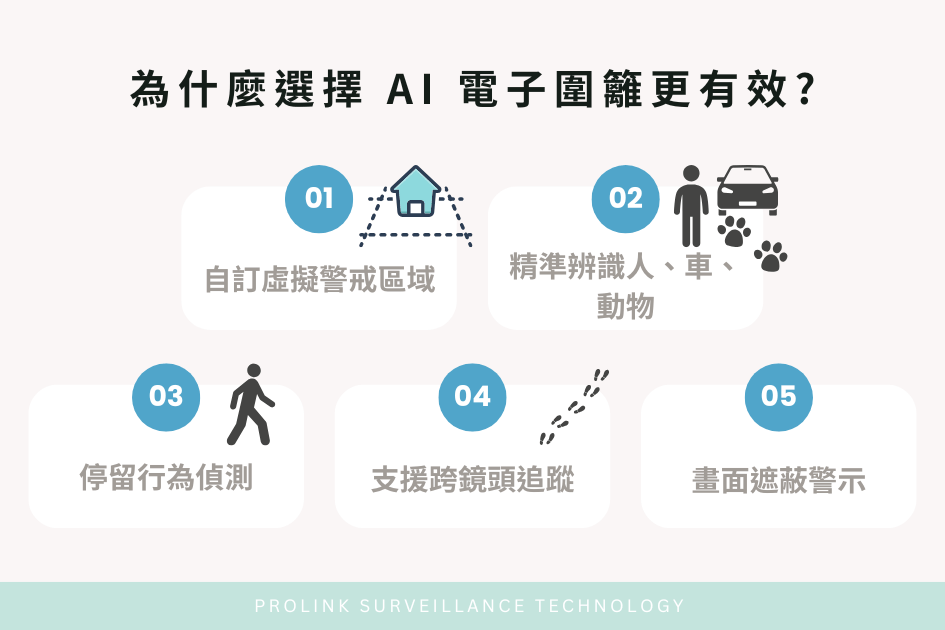
To solve the false alarm problem and strengthen perimeter protection, the plant deployed an AI video analytics system that uses high-speed GPU-based video analysis to significantly reduce false alarms, with the following features:
- Customizable Virtual Alert Zones
Alert lines and detection zones can be drawn on screen, with entry and exit directions defined to clearly mark the monitored area. An alarm is triggered the instant an object crosses the line, effectively improving detection accuracy. - Precise Recognition of People, Vehicles, and Animals
The AI model can distinguish between "people," "vehicles," and "animals," filtering out non-intrusion events such as rustling leaves or birds flying by, significantly reducing false alarms. - Loitering Detection
In addition to intrusion alerts, the system can also be configured to detect "loitering" behavior, for example, triggering an alert if someone lingers near a wall longer than a preset time. - Cross-Camera Tracking Support
For large sites such as power plants or logistics centers, when an incident occurs, the system can track a specific individual's movement path across different cameras to gain a complete picture of their route. - Camera Tampering Alerts
If a camera's view is maliciously blocked or damaged, the system immediately notifies administrators to prevent blind spots from forming.
Power Plant Deploys Pro-Link's AI Virtual Fence | Field Test Results
In addition to applying AI video analytics technology, the Pro-Link team also drew on past site experience to set the virtual fence's detection range at 20-25 meters for optimal results.
Field Test Results:
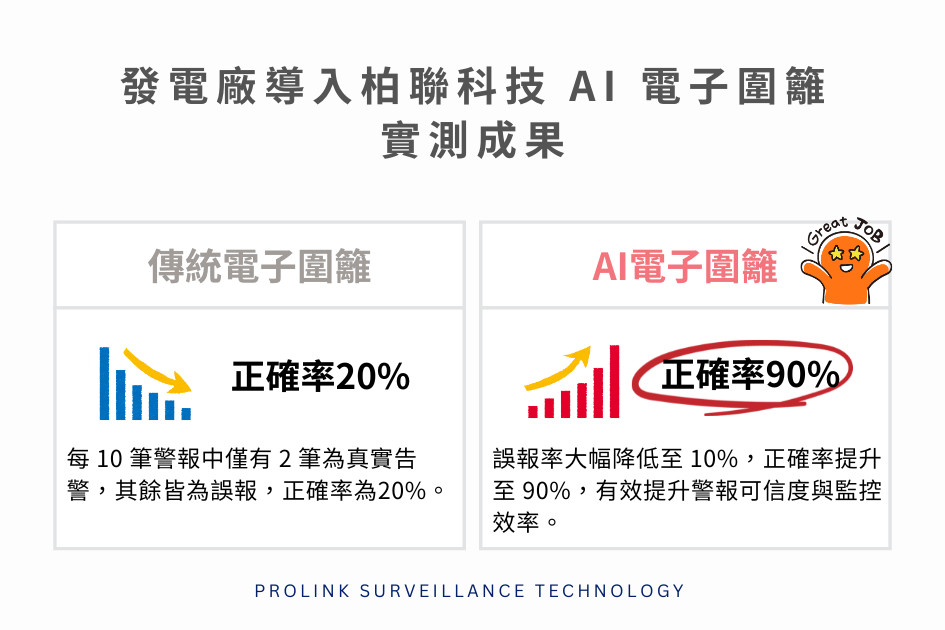
- Traditional method: Only 2 out of every 10 alerts were genuine, with the rest being false alarms, an accuracy rate of 20%.
- After AI deployment: The false alarm rate dropped significantly to 10%, with accuracy rising to 90%, effectively improving alert reliability and monitoring efficiency.
This case uses AI video analytics technology from the UK brand Eocortex