
In our article on whether mobile access control leaks personal information, we shared the value of partnering with a reliable mobile access control provider to protect company, employee, and asset information, including:
State-of-the-art technology and experts who tailor a protection system to your needs
- Protection under international information security policies and regulations, such as Europe's General Data Protection Regulation (GDPR) for personal information
- A broad range of features to meet organizational needs, such as enterprise policy enforcement settings, two-step authentication, and flexible security designs based on specific operational risks
In this issue, we'll focus on how access control providers securely deliver mobile access apps to smartphones, enabling secure access to company facilities while protecting the owner's personal privacy.
This article discusses common misconceptions about how mobile access control apps affect phone performance and battery life. When people connect an app installed on their phone to a workplace access control system, they generally have two main concerns: first, that the activity requires significant phone memory or CPU, which could negatively affect performance; and second, that it could significantly drain battery life.
First, let's discuss whether mobile apps affect phone performance. Then, I'll discuss the impact of mobile access on smartphone battery life.
■ Mobile Access Control SystemsAPPDo They Affect Phone Performance?
First, installed mobile access control apps are designed to be small, fast, and efficient, requiring relatively little memory. After installing the mobile app, there is almost no loss in phone performance. The app runs in the background and has almost no impact on other phone operations.
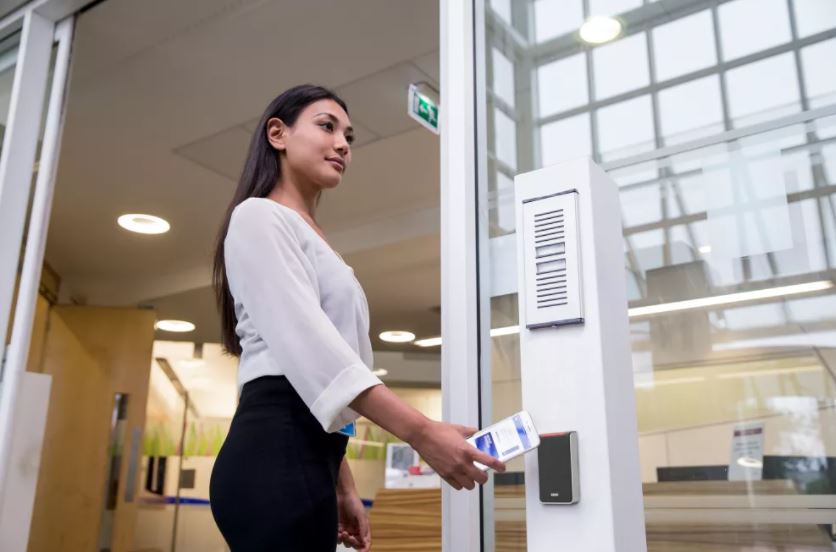
Mobile access control apps are typically dormant and only access memory space once the user brings the device near the reader. This action uses an extremely small amount of memory, CPU, and battery power to complete.
Take a typical 64 GB iPhone, for example — the app occupies only about one-fiftieth of one percent (0.0002%) of the phone's storage. The credential itself is even smaller, with optimized code designed for smart cards and other forms of electronic devices: remember, small, fast, and efficient.
As a world-leading mobile access control provider, HID Global works with thousands of customers every day, opening tens of thousands of doors and entrances in buildings and facilities across many countries. Our mobile access control apps run continuously to meet customers' secure access requirements, with efficient designs that minimize the impact on phone performance and processing time.
■ Mobile Access ControlControl SystemAPPDoes It Affect Phone Battery Life?
Installed mobile access control apps are designed to be energy-efficient — they don't have the power demands of, say, streaming music or recording video. Mobile access control apps are designed to use as little memory and processing power as possible. They are highly efficient, with minimal impact on battery life.
For example, in a series of mobile app tests, we found that during a two-hour test in which the phone was used to open a door once per minute, battery consumption was as low as 0.0025%.
This means you could use the app hundreds of times without seeing any noticeable loss in battery life. Users don't need to worry that using a mobile access control system will drain their phone's battery, or otherwise affect device performance in any way.
Let's compare the efficiency of HID's mobile access control app to a Ferrari. We've built an efficient, flexible mobile access control app system paired with smart cards that share similar characteristics. It runs quickly within the operating system at a controlled level of efficiency to deliver ultra-fast results. We're not asking the mobile access system to drive a bulky SUV and sacrifice efficiency — we know our customers prefer the speed of a Ferrari.