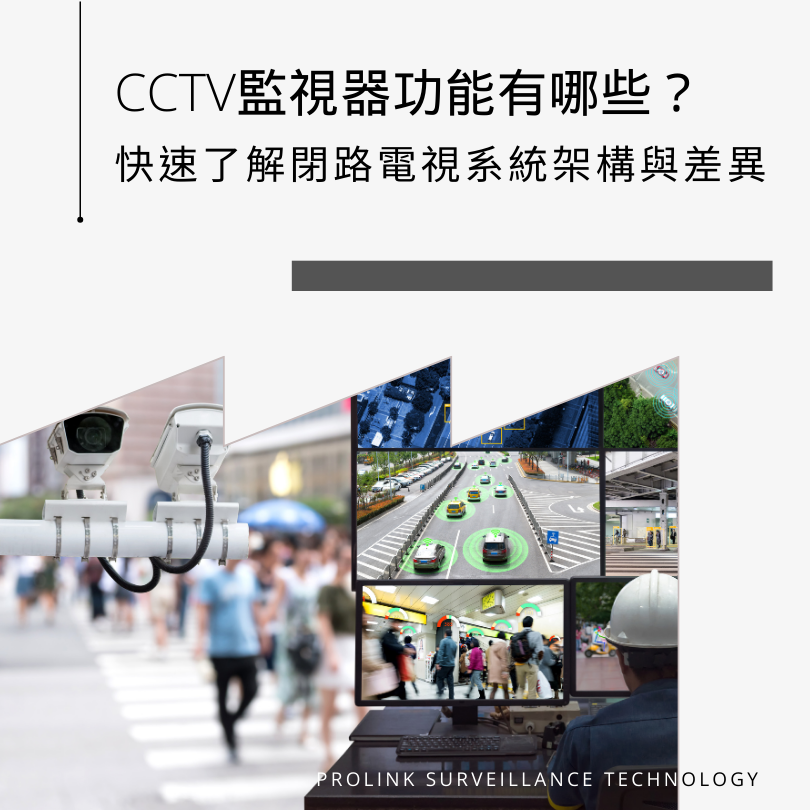
What Is CCTV?
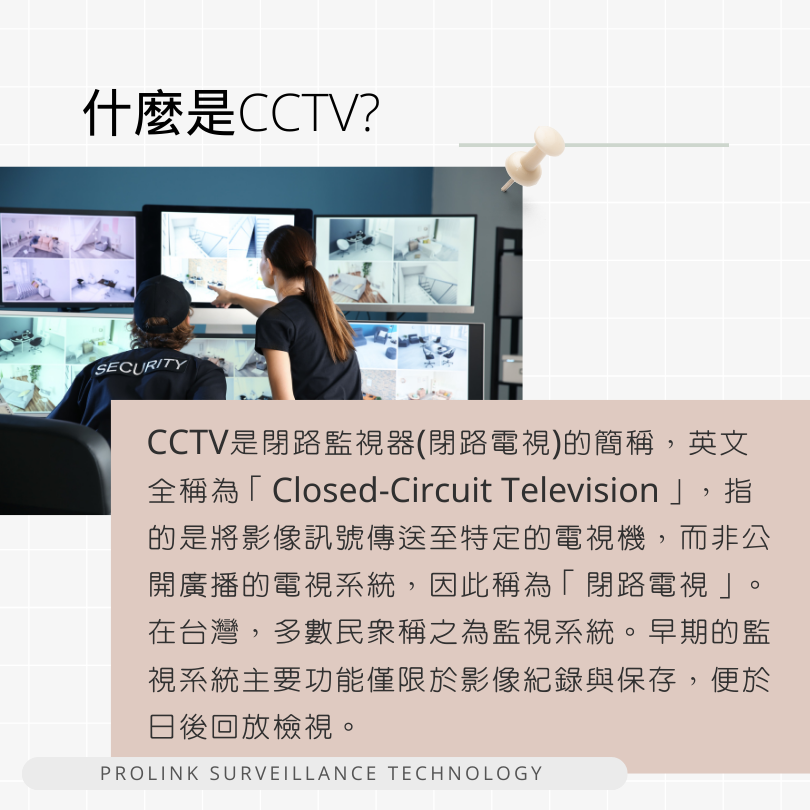
CCTV stands for Closed-Circuit Television, referring to a system that transmits video signals to specific monitors rather than broadcasting publicly — hence “closed-circuit.” In Taiwan, most people simply call it a surveillance system. Early surveillance systems were mainly limited to recording and storing footage for later playback.
CCTV Features
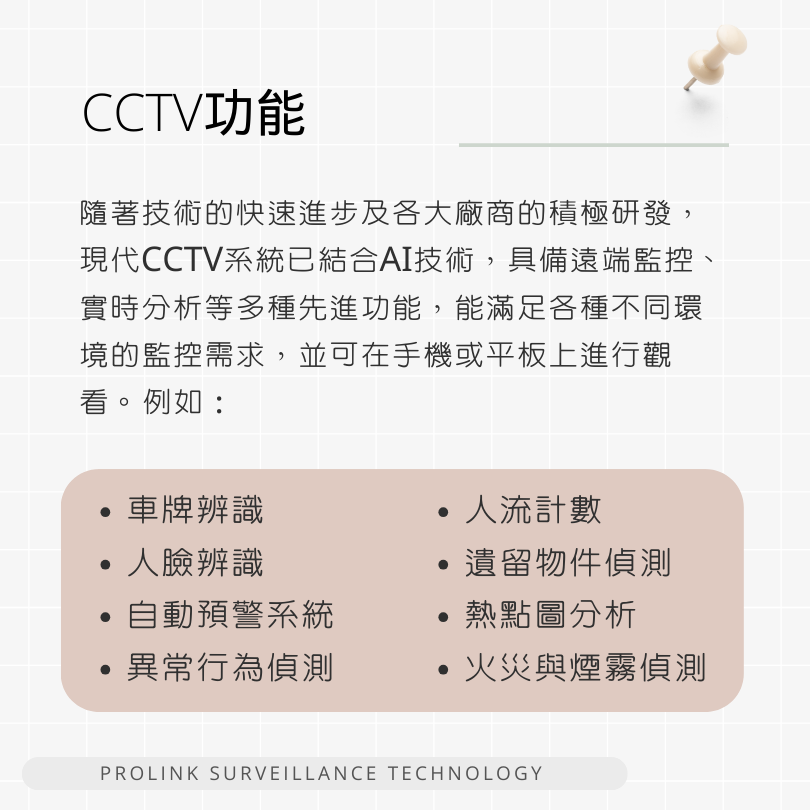
With rapid technological progress and active R&D from major manufacturers, modern CCTV systems now incorporate AI, offering advanced features such as remote monitoring and real-time analysis that meet the needs of a wide range of environments, with viewing available on a phone or tablet. For example:
- License Plate Recognition
- Facial Recognition
- Automatic Early Warning System
- Abnormal Behavior Detection
- People Counting
- Abandoned Object Detection
- Heat Map Analysis
- Fire and Smoke Detection
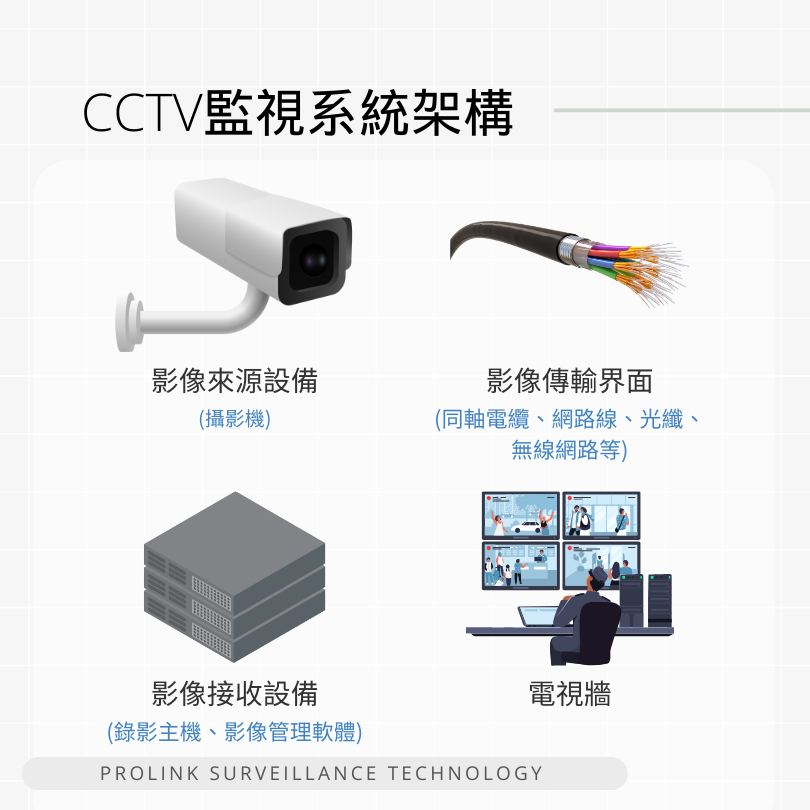
CCTV System Architecture
- Video Source Device
(Camera)
- Video Receiving Device
(Recorder, Video Management Software)
- Video Transmission Interface
(Coaxial Cable, Ethernet Cable, Fiber Optic, Wireless Network, etc.)
- Video Wall
Analog Cameras vs. IP Cameras
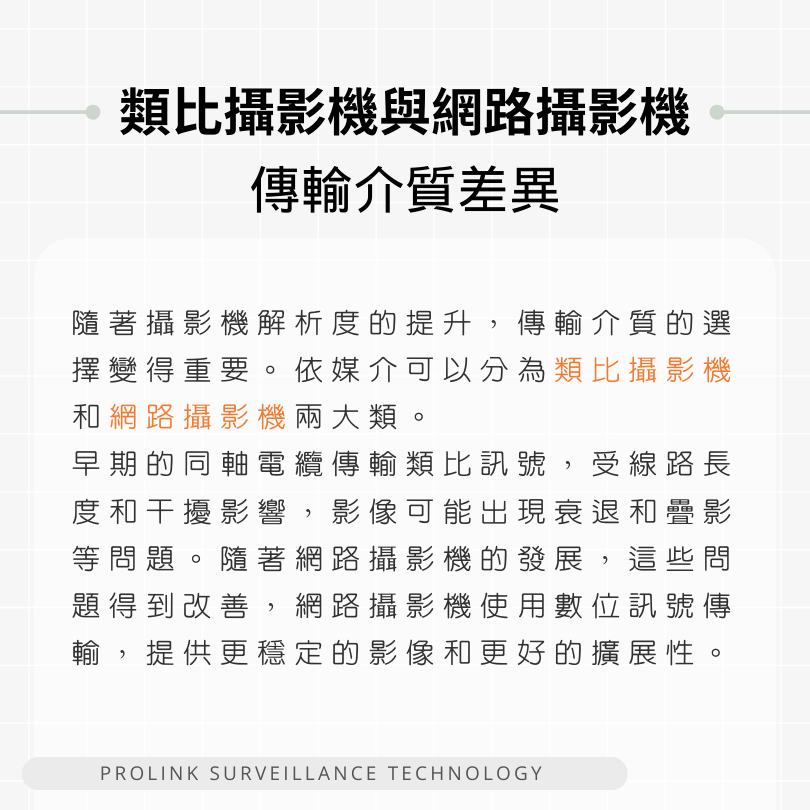
Differences in Transmission Media
As camera resolution has increased, the choice of transmission medium has become important. By medium, cameras can be divided intoanalog cameras and IP camerasandIP Cameratwo main categories.
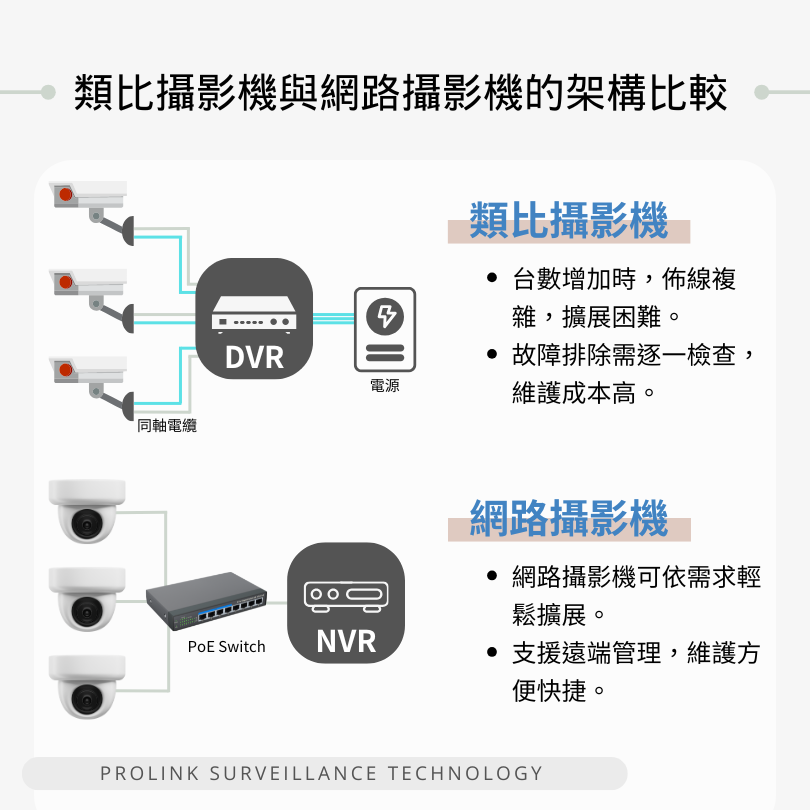
Early coaxial cable transmitted analog signals, and image quality could degrade or show ghosting due to cable length and interference. With the development of IP cameras, these issues have been resolved — IP cameras transmit digital signals, providing more stable video and better scalability.
Analog Cameras vs. IP Cameras
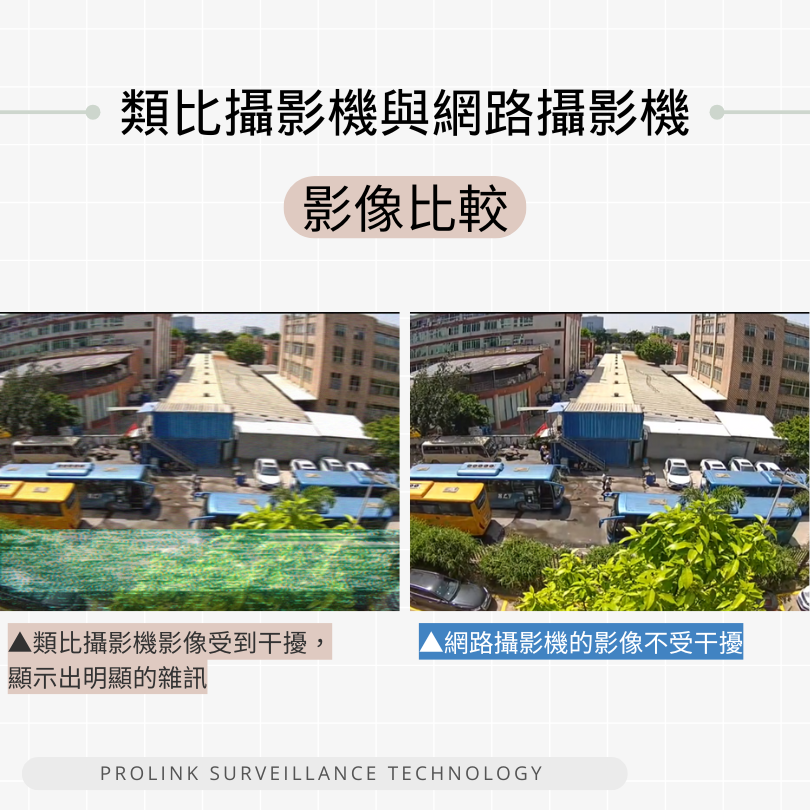
Video Quality Comparison
Comparing the Architecture of Analog Cameras and IP Cameras
analog cameras and IP cameras
- As the number of units increases, wiring becomes complex and scaling becomes difficult.
- Troubleshooting requires checking units one by one, resulting in high maintenance costs.
IP Camera
- IP cameras can be easily scaled as needed.
- Support remote management, making maintenance quick and convenient.