How to Prevent Equipment Shutdowns from Overheating? 6 Benefits of Predictive Maintenance with Thermal Imaging
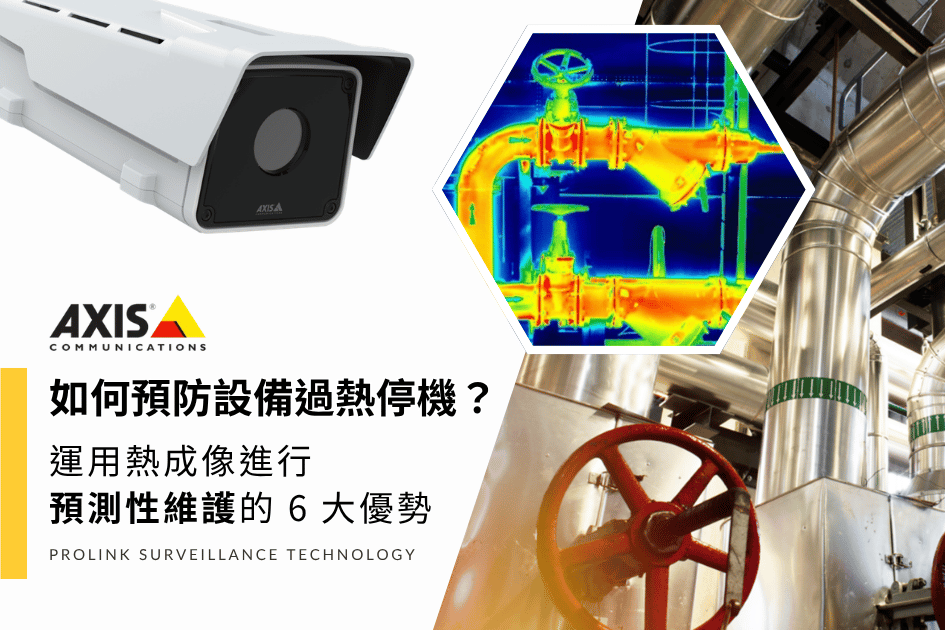
As global energy prices fluctuate and demand continues to rise, businesses' requirements forstable equipment operationandenergy securityare growing, and manufacturers and other energy-intensive industries are placing greater emphasis on equipment management andpredictive maintenancemechanisms.
Especially during peak summer electricity demand, when electrical equipment operates under heavy load for extended periods, failing to detect abnormal temperatures early can not only cause costly equipment downtime but also increase the risk of fire.
Combined with labor shortages, many facilities need to run equipment around the clock, and production lines are increasingly moving toward"unmanned operation"-- making real-time visibility into equipment status and operational safety a critical issue that businesses commonly face.
As Production Lines Go Unmanned, Who's Watching Over Equipment Safety?
Today's "unmanned operation" is actually closer to "minimally staffed" and "remote." As the workforce shrinks and operational demands grow, many industries -- such as semiconductors, power, chemicals, and logistics -- need to operate around the clock.
With limited staff and equipment running continuously, facilities are facing problems inherent to traditional management approaches:
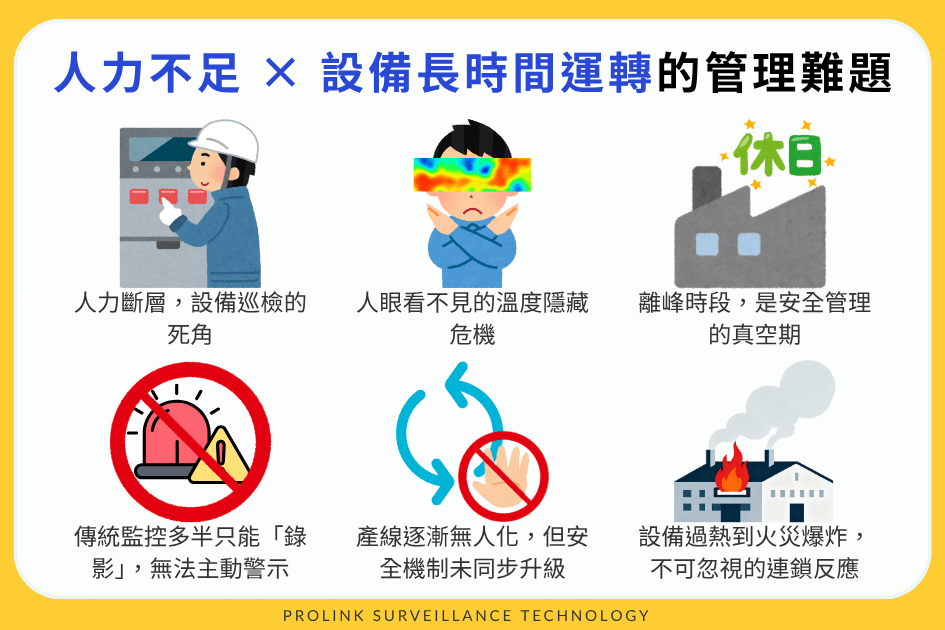
▋ Staffing Gaps Create Blind Spots in Equipment Inspection
On-site staff are limited, and even with shift coverage, it's hard to keep a constant eye on every piece of equipment or the maze of interconnected piping. In large-scale facilities, manual monitoring alone is simply no longer enough.
▋ Temperature Dangers the Human Eye Can't See
Most equipment failures don't happen instantly -- they're the result of gradually rising temperatures and accumulating load.
The human eye can't detect temperature changes, so in environments with complex piping or poor lighting, early warning signs are easily missed until the equipment shuts down or a fire breaks out.
▋ Off-Peak Hours Are a Safety Management Blind Spot
Nights and holidays are when staffing is thinnest -- and also when factory fires are most likely to occur. Once an anomaly occurs, any delay in reporting it allows losses to escalate quickly.
▋ Traditional Surveillance Can Mostly Only "Record" -- It Can't Proactively Warn
Traditional surveillance is mostly limited to "after-the-fact review," lacking real-time early warning. If no one is actively watching the screen, the camera is just decoration, unable to stop a disaster from escalating in the critical first moments.
▋ Production Lines Are Going Unmanned, But Safety Systems Haven't Kept Pace
Many companies have adopted automated production, but their safety management remains stuck in the old model. Without smart safety mechanisms like AI smoke/flame detection and temperature monitoring, the risks remain even after production has been upgraded.
▋ From Equipment Overheating to Fire and Explosion: A Chain Reaction That Can't Be Ignored
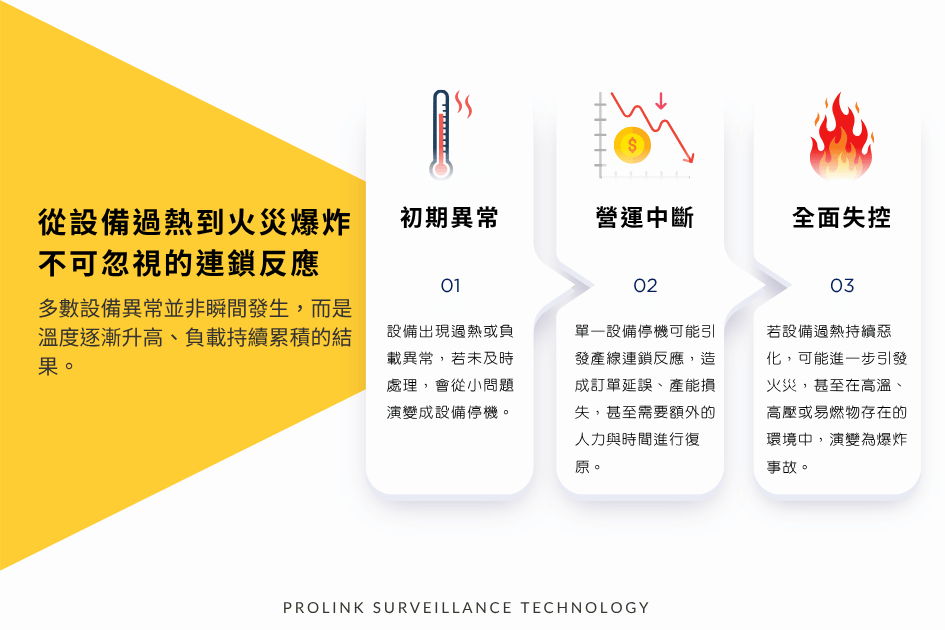
Many major disasters trace back to a small anomaly that was overlooked.
- Initial Anomaly:Equipment develops overheating or abnormal load, and if not addressed in time, a minor issue can escalate into equipment downtime.
- Operational Disruption: A single piece of equipment going down can trigger a chain reaction across the production line, causing order delays, lost capacity, and even requiring additional manpower and time to recover.
- Total Loss of Control: If equipment overheating continues to worsen, it can escalate into a fire -- and in environments with high heat, high pressure, or flammable materials, even into an explosion.
Rather than waiting to deal with equipment failure after it happens, businesses need a predictive maintenance mechanism that can raise the alarm at the earliest signs of an anomaly -- enabling safety management to keep pace with production automation through more real-time, proactive monitoring. Andthe "thermal camera"is exactly the tool for catching anomalies early and reducing the risk of downtime and fire.
Early Warning + Automatic Detection: 6 Core Advantages of AXIS Thermal Cameras
Many people mistakenly think thermal imaging can only "measure temperature."
Unlike traditional optical cameras, thermal cameras capture the heat radiation (long-wave infrared) emitted by objects and convert it into an electronic signal, ultimately displaying it as a grayscale temperature map.
It's more like a round-the-clock security sensor, unaffected by lighting conditions, that can reveal potential risks hidden in darkness, smoke, or nighttime environments before they escalate.
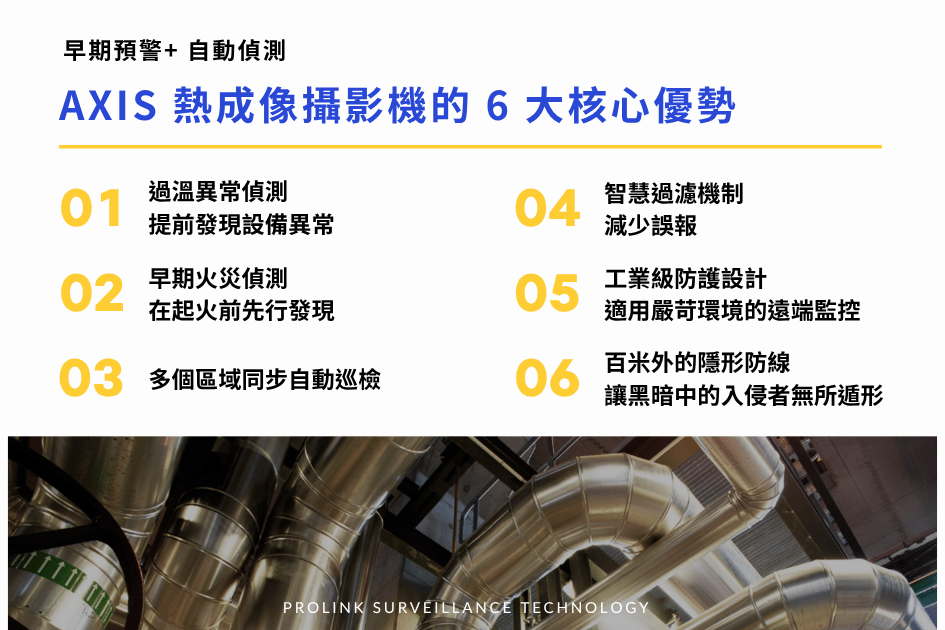
1 | Over-Temperature Anomaly Detection: Catching Equipment Problems Early
Thermal imaging doesn't just determine whether a temperature has "reached a certain degree" -- it can detect:
Temperature above a set threshold Temperature below a set threshold Temperature changing too quickly
For example, when the temperature in a given area exceeds the set threshold and stays there for a period of time (such as remaining above the alert threshold for 30 seconds), the system automatically triggers an alert and logs the event -- buying valuable time for repairs before the equipment actually overheats or fails.
(The following is footage from an actual field test)
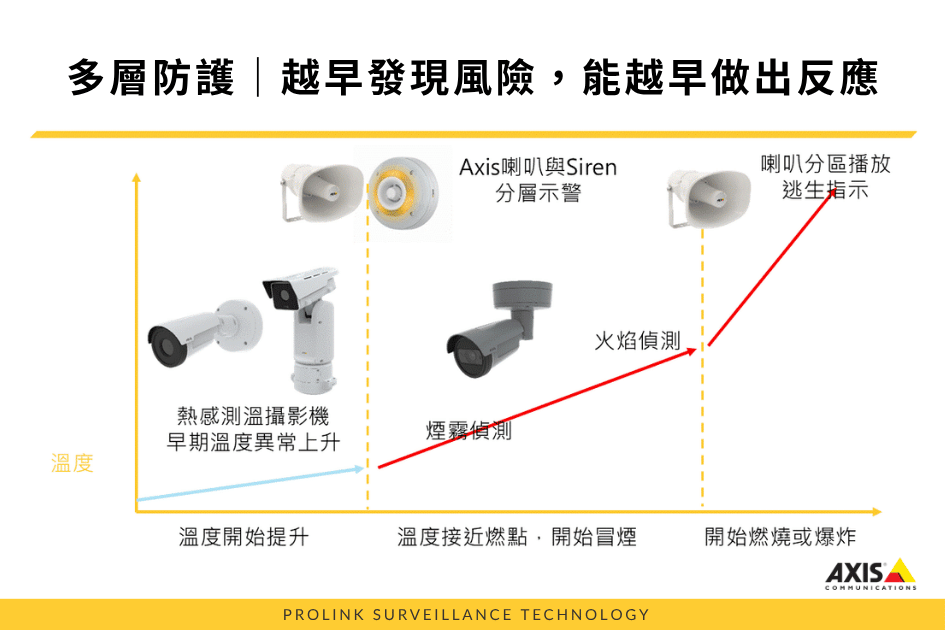
2 | Early Fire Detection: Catching Fires Before They Start
Fires usually don't happen in an instant -- they're the result of a gradual rise in temperature.
Thermal imaging can detect abnormal temperature changes before smoke or flames even appear, helping on-site staff take early action and significantly reducing the risk of fire and equipment damage.
3 | Simultaneous Automatic Inspection of Multiple Zones
Breaking the limitation of manual inspection, where only one location can be checked at a time, it supports polygon-based detection zones and can monitor up to10 zonesfor temperature values and changes at the same time -- for example, motors, bearings, electrical panels, and conveyor belts can all be monitored simultaneously.
Even when equipment is located up high or surrounded by complex piping, thermal imaging can overcome spatial constraints to maintain stable monitoring.
It also features:
Rapid identification of abnormal hot spots by colorOn-demand viewing to instantly read the temperature at any locationTemperature data can be integrated to support statistical analysis and maintenance planning
(The following is footage from an actual field test)
4 | Smart Filtering to Reduce False Alarms
For example, if a vehicle briefly passes through a monitored high-temperature zone, the heat from its exhaust pipe won't be mistaken for a fire -- the system automatically filters out non-alarm events. This prevents excessive false alarms, which would otherwise erode trust in the alert system and reduce its effectiveness at the moments that matter most.
(The following is footage from an actual field test)
5 | Industrial-Grade Protection for Remote Monitoring in Harsh Environments
In high-temperature, high-pressure, or hazardous areas, personnel no longer need to frequently enter the site for inspections -- remote footage alone provides real-time visibility into equipment and environmental conditions.
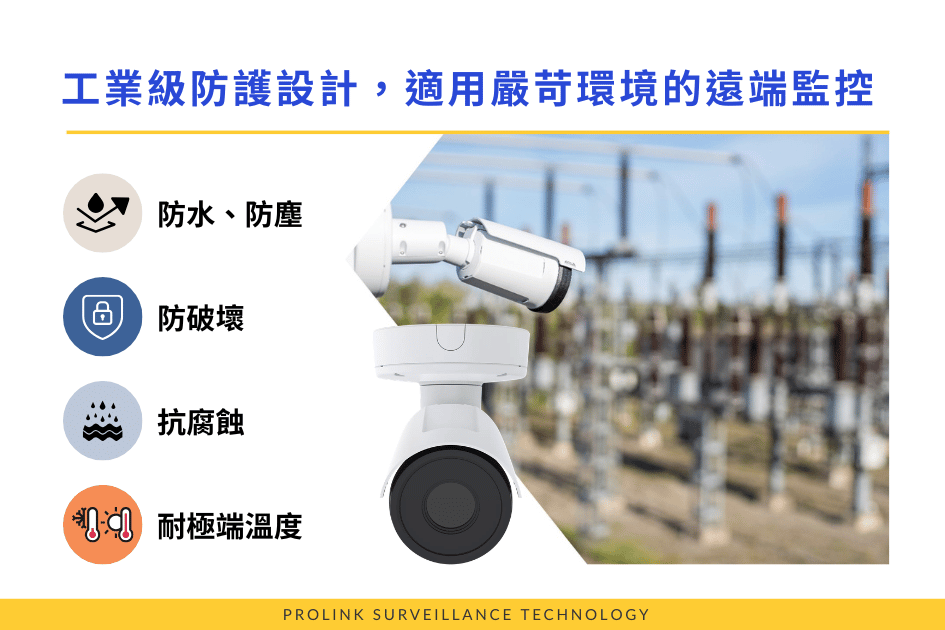
The equipment features industrial-grade protection, including:
- Waterproof and dustproof
- Vandal-resistant
- Corrosion-resistant
- Resistant to extreme temperatures
6 | An Invisible Perimeter From 100 Meters Away: Leaving No Place for Intruders to Hide in the Dark
Beyond equipment monitoring, thermal imaging can also serve as a highly reliablevirtual fence (perimeter protection)tool.
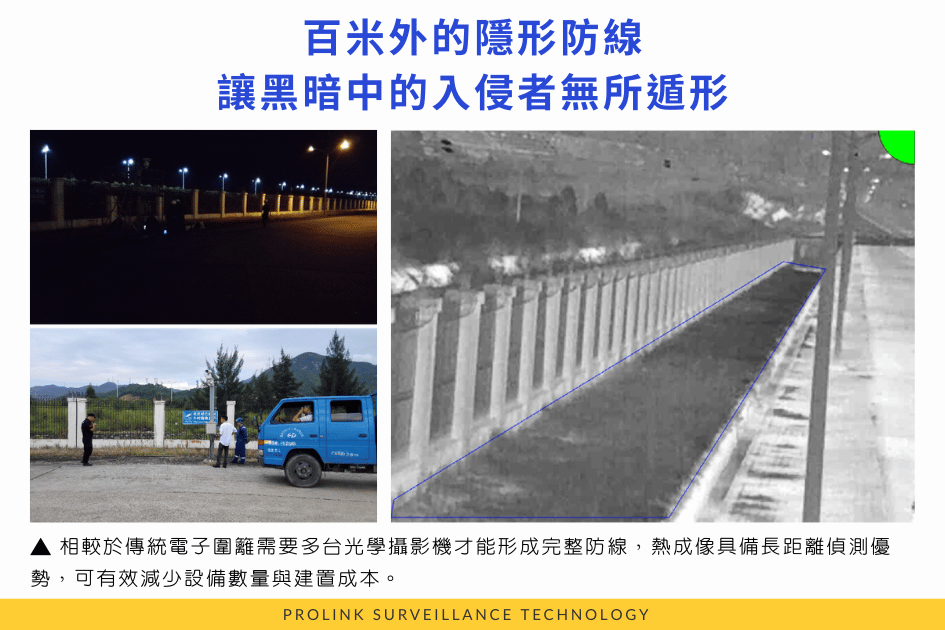
Regardless of weather conditions, such as rain or fog, thermal cameras reliably detect intruders and provide long-range protection.Detection range can exceed 200 meters, depending on the lens configuration chosen for the site.
Compared with traditional virtual fences, which require multiple optical cameras to form a complete protective line,thermal imaging offers a long-range detection advantage that can effectively reduce the number of devices needed and lower deployment costs.
Unlike optical cameras, which rely on visible light, thermal cameras directly detect the heat energy emitted by a target, maintaining awareness of anomalies even in total darkness or when obstructed.
It is especially well-suited for the perimeter of a facility, remote sites, critical infrastructure, and unmanned areas at night, effectively preventing theft and vandalism.
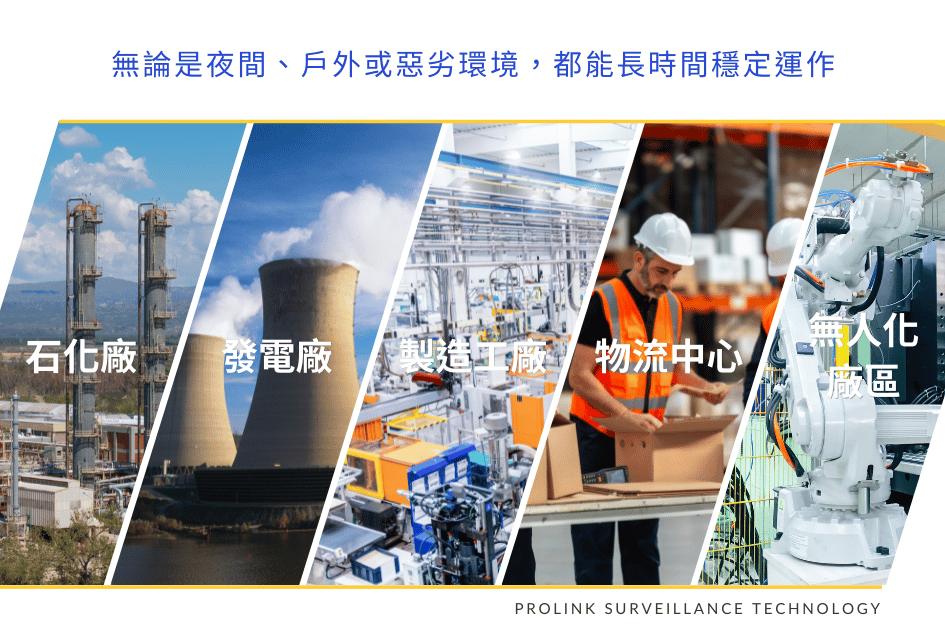
Suitable Applications
Don't Just Be a "Witness" -- Give Thermal Monitoring Real "Response Power"
Thermal cameras capture heat images and cannot directly identify an individual's identity, allowing surveillance tasks to be carried out while still respecting privacy.
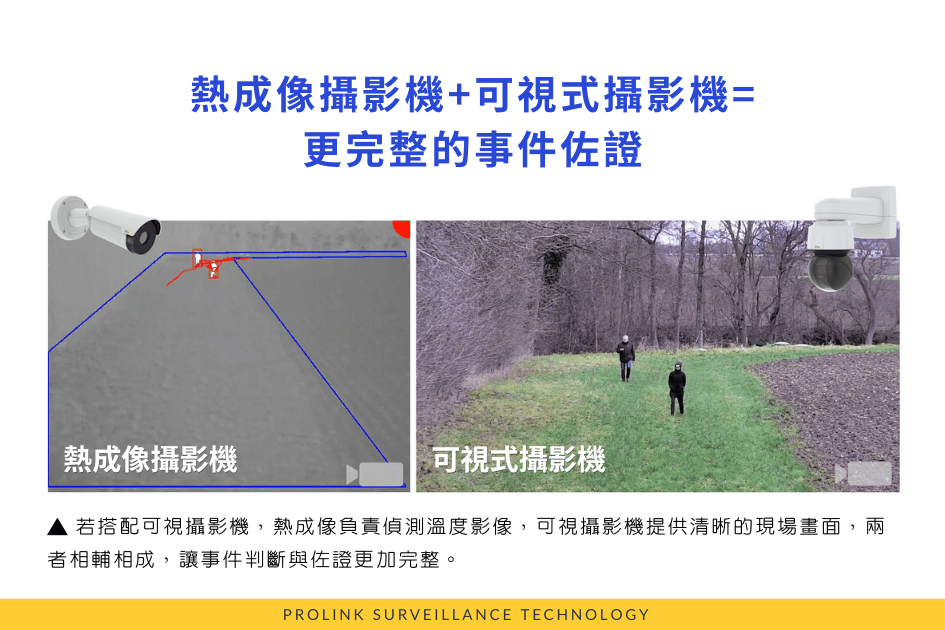
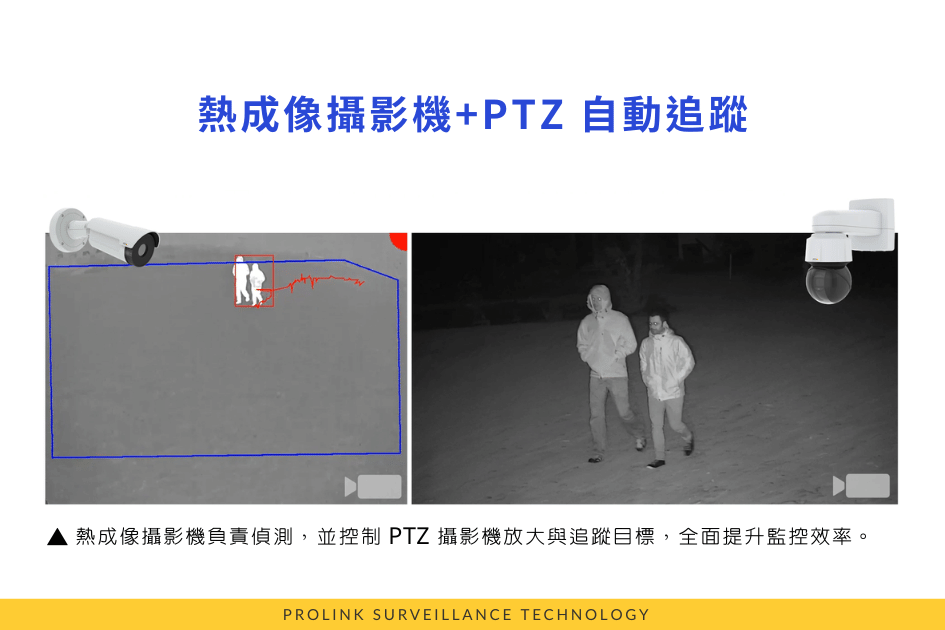
When paired with a visible-light camera, thermal imaging detects temperature while the visible-light camera provides a clear view of the scene -- the two complement each other for more complete event assessment and evidence. Adding a PTZ camera lets the system automatically zoom in and track the target, further improving monitoring efficiency.
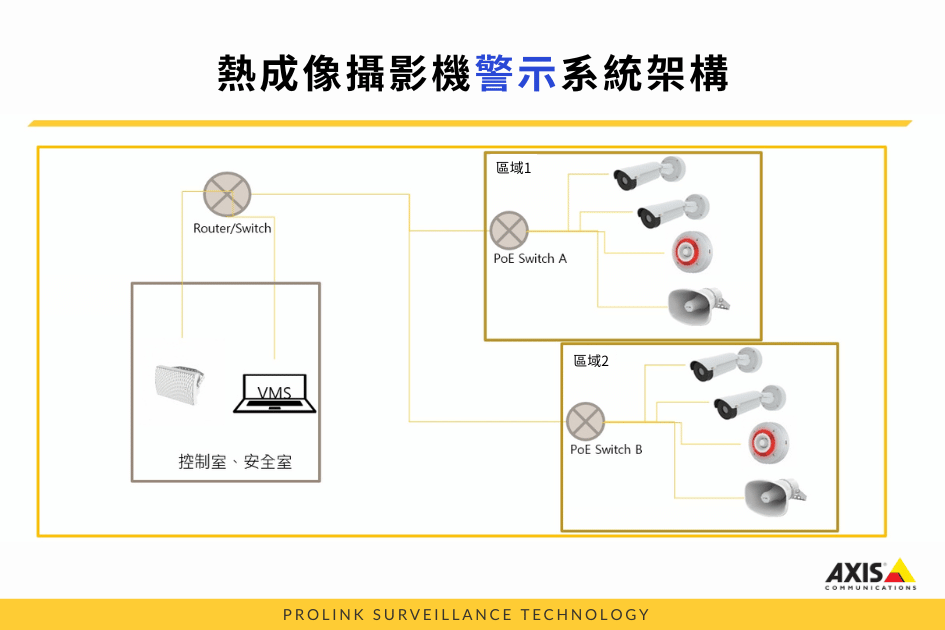
By supporting edge-to-edge technology, the system can connect directly to network speakers or alert devices. When an abnormal temperature, intrusion, or fire risk is detected, it can immediately issue an audio warning or broadcast instructions to alert on-site personnel and guide evacuation, enabling an early response.
Surveillance systems are no longer just a passive"witness"that records -- they can now respond proactively the moment something happens, delivering real protection.