What Is a Speed Gate?
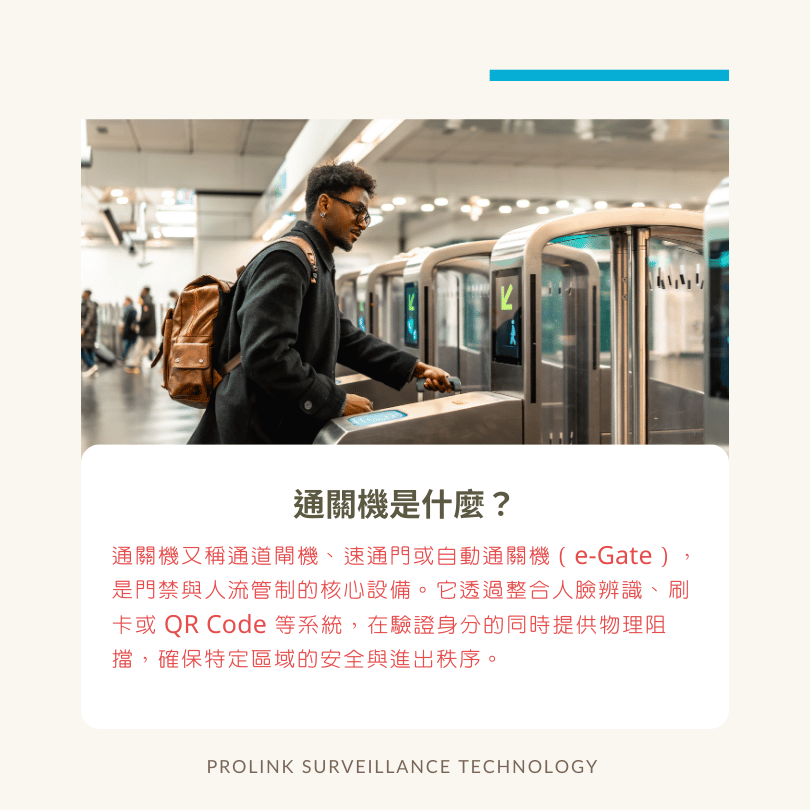
A speed gate — also known as a turnstile gate or e-Gate — is a core device for access control and crowd management. By integrating systems such as facial recognition, card readers, or QR codes, it verifies identity while providing a physical barrier, ensuring security and orderly access to specific areas.
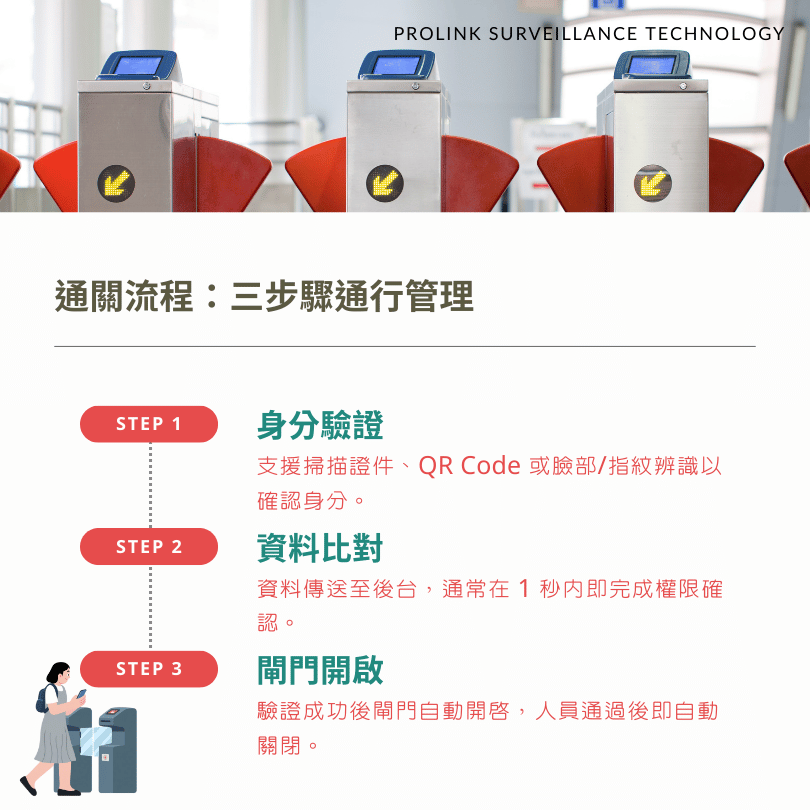
The Passage Process: Three-Step Access Management
- STEP 1 Identity Verification: Supports scanning ID documents, QR codes, or facial/fingerprint recognition to confirm identity.
- STEP 2 Data Matching: Data is sent to the backend, with permission verification typically completed within 1 second.
- STEP 3 Gate Opening: Once verified, the gate opens automatically and closes again once the person has passed through.
5 Key Factors When Choosing a Speed Gate
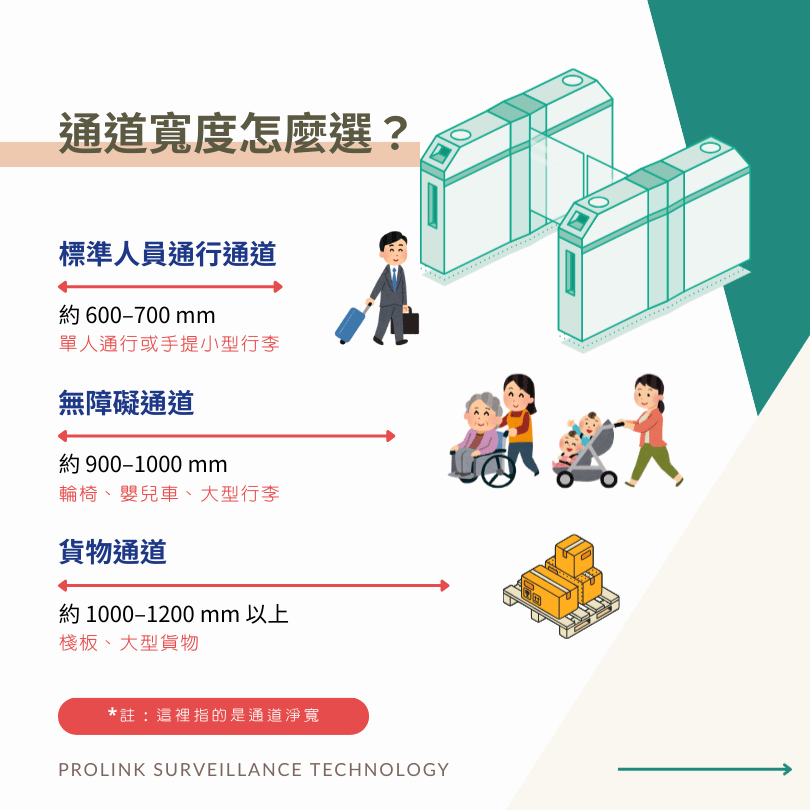
1. How to Choose the Lane Width
Lane width should be planned according to the space and usage needs of the site — too narrow hurts the passage experience, while too wide can reduce access control effectiveness.
- Standard pedestrian lane: approx. 600–700 mm
Suitable for single-file passage or carrying small bags, commonly seen in corporate buildings or general restricted areas.
- Accessible lane: approx. 900–1000 mm
Accommodates wheelchairs, strollers, or large luggage.
- Cargo lane: approx. 1000–1200 mm or more
Common in manufacturing or logistics settings, allowing pallets or cargo carts to pass through restricted areas.
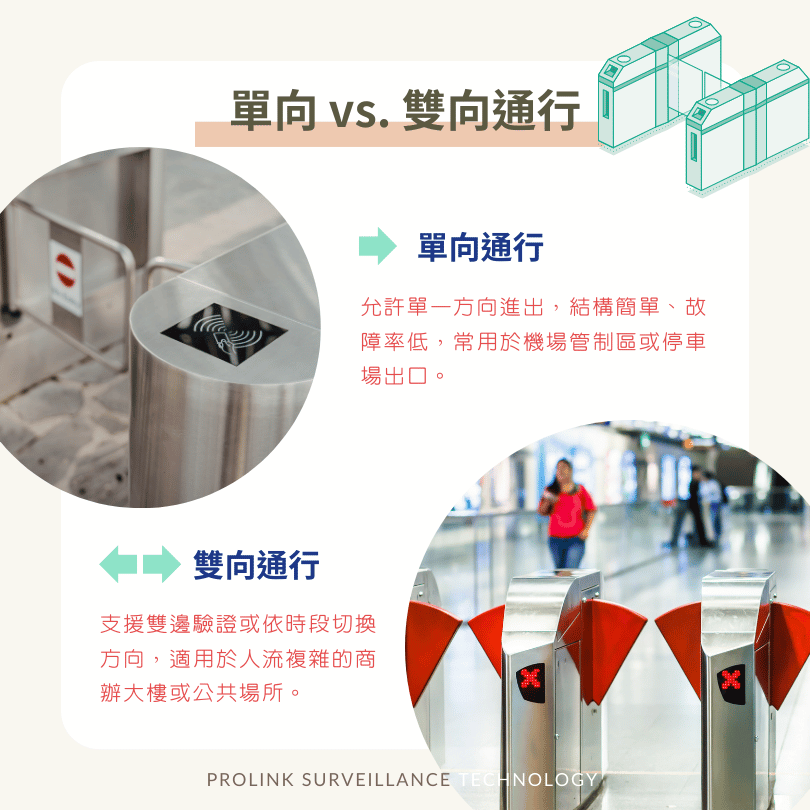
2. One-Way vs. Two-Way Passage
- One-Way: Allows passage in only one direction. Simple in structure with a low failure rate, commonly used at airport restricted areas or parking lot exits.
- Two-Way: Supports verification from both sides or switches direction by time of day, suited to office buildings or public venues with complex foot traffic.
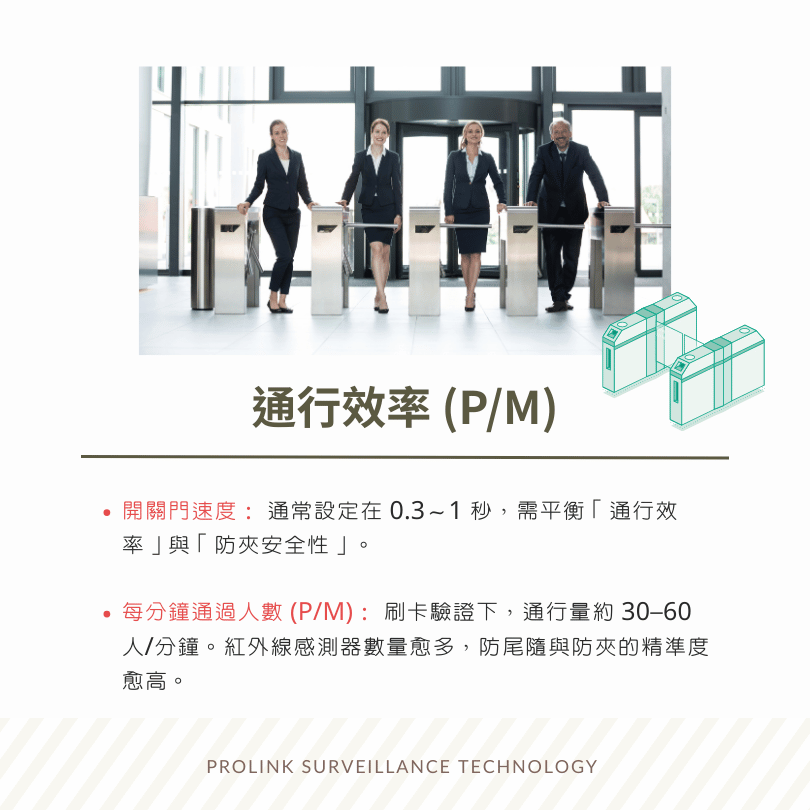
3. Throughput (People per Minute)
In high-traffic venues like metro stations or large enterprises, efficiency is the top priority:
- Open/close speed: Typically set between 0.3 and 1 second, balancing throughput with anti-pinch safety.
- People per minute (P/M): With card-based verification, throughput is about 30–60 people per minute. More infrared sensors improve the precision of tailgate and anti-pinch detection.
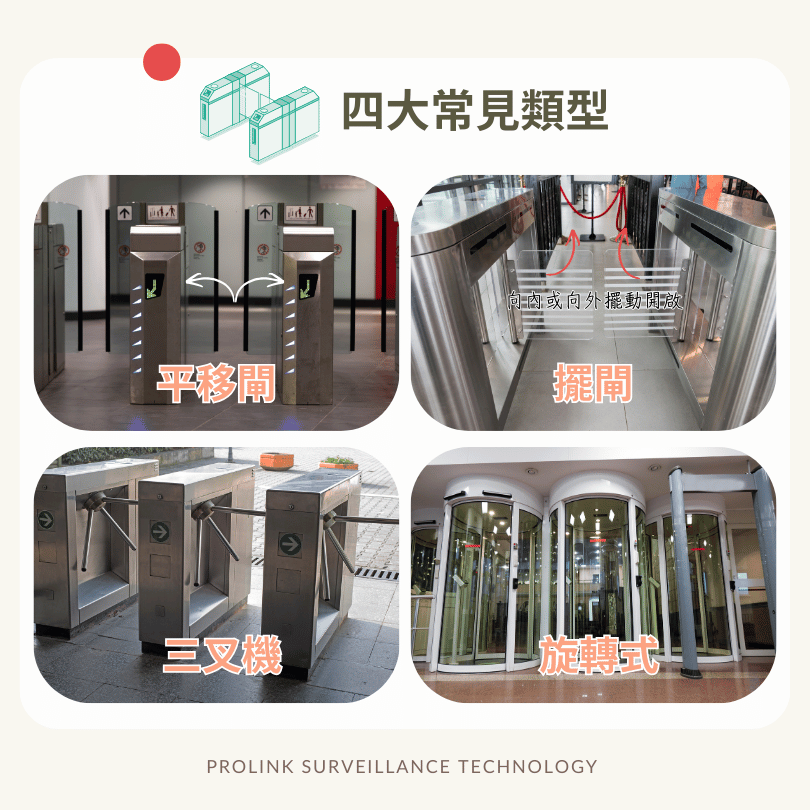
4. Four Common Types and Their Features
- Sliding Gate: When opening, the gate panels slide horizontally left and right like automatic doors, retracting to the sides. Offers a wider lane and a modern look, commonly seen at corporate buildings or smart office entrances.
- Swing Gate: Opens by swinging arms inward or outward. Highly flexible lane design that can also be made wider to accommodate wheelchairs or luggage, commonly seen at airports, malls, or corporate buildings.
- Tripod Turnstile: Rugged and durable with basic anti-tailgating protection, commonly used at construction sites, factories, or gyms.
- Full-Height Turnstile: Offers the highest level of security, completely preventing tailgating and climbing over, commonly used at financial institutions, prisons, and other high-security facilities.
5. Single-Motor vs. Dual-Motor
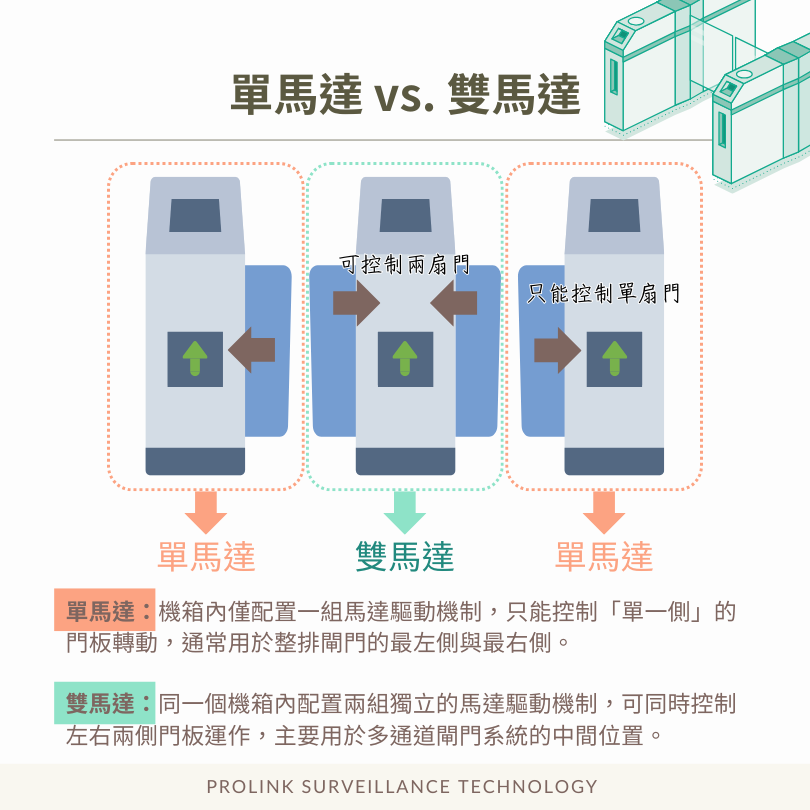
When planning multi-lane gate systems, the choice between "single-motor" and "dual-motor" cabinet configurations is a key factor affecting space utilization and equipment cost.
- Single-Motor:
The cabinet contains only one motor drive mechanism, controlling onlya "single side"of the gate panel's movement, typically used at the leftmost and rightmost ends of a row of gates.
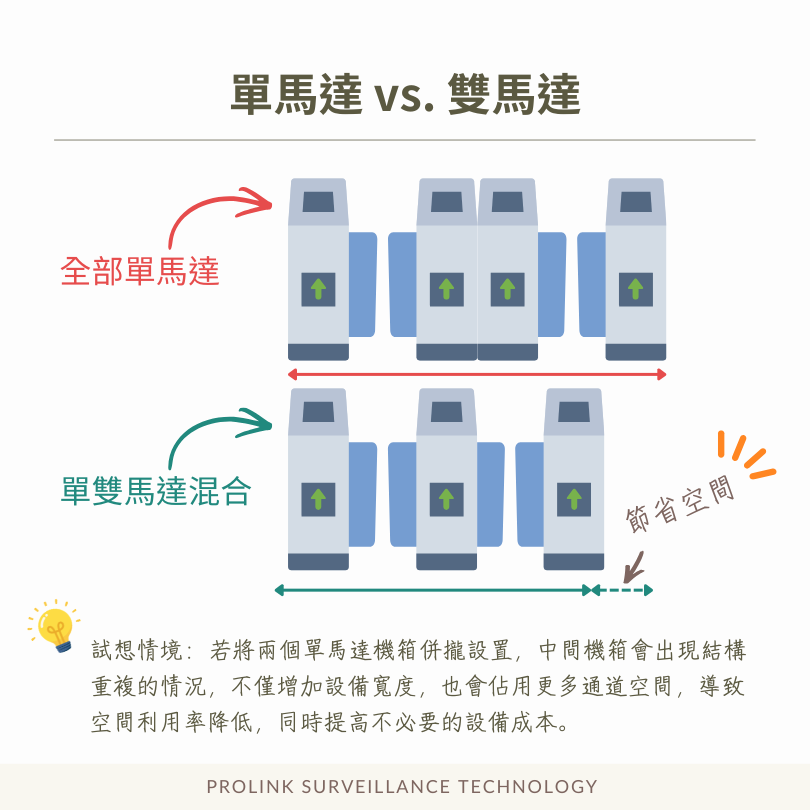
If two single-motor cabinets are placed side by side, the middle cabinets end up duplicating structure — not only increasing equipment width but also taking up more lane space, reducing space efficiency and adding unnecessary equipment cost.
- Dual-Motor:
A single cabinet houses two independent motor drive mechanisms,allowing it to control both left and right gate panels simultaneously,mainly used at the middle positions of a multi-lane gate system.
When two or more lanes are needed, a single dual-motor cabinet in the middle can drive both adjacent gate panels, replacing two single-motor cabinets.
This design effectively reduces total equipment width, improves space utilization, creates a more spacious layout, and gives the equipment a cleaner, more consistent appearance.